
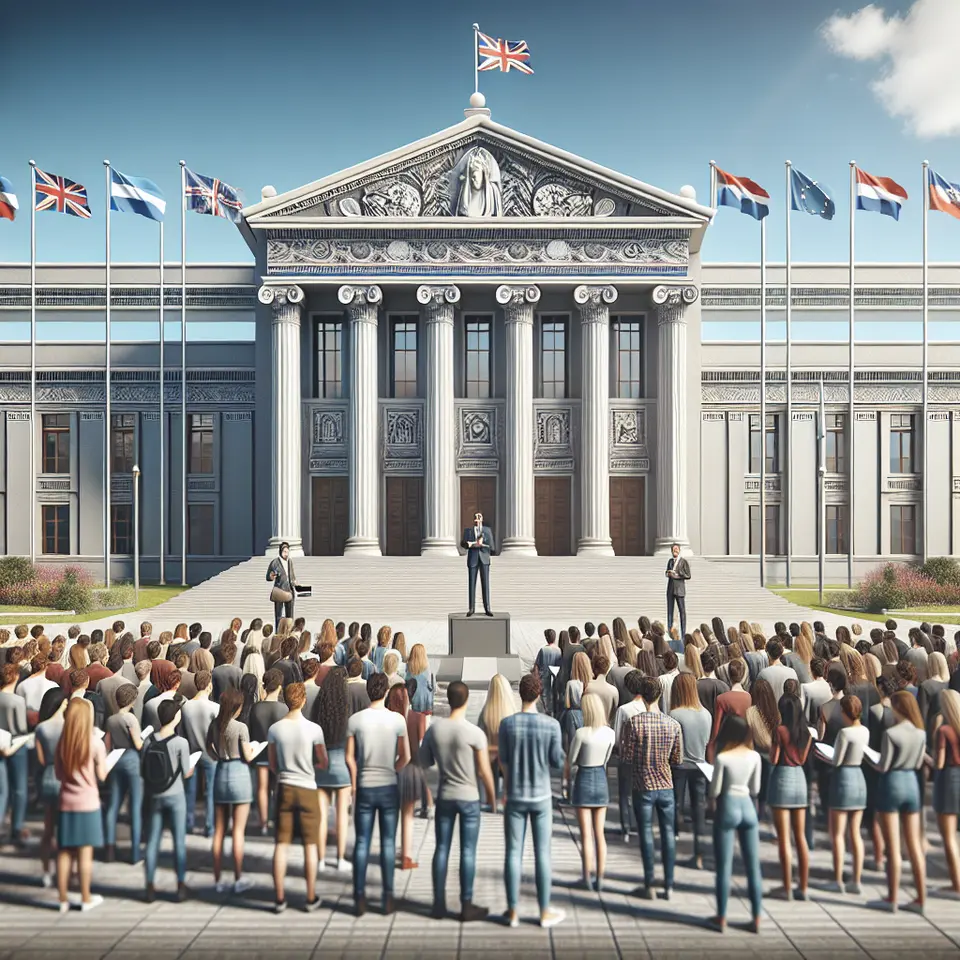
UWM’s Summer Washington DC Program on International Politics & Foreign Policy
Estimated reading time: 4 minutes
- Immersive three-week program blending intensive study in Milwaukee with high-impact experiences in Washington, DC.
- Direct access to diplomats and policy experts from embassies, international organizations, think tanks, and major media outlets.
- Focus on global power, regimes, and policymaking including war, terrorism, human rights, and international economics.
- Prime downtown DC housing near the National Mall, museums, and vibrant neighborhoods like Adams-Morgan and Georgetown.
- Application required through the UWM Center for International Education by the stated deadline.
Table of Contents
- Program Overview
- Academic Experience in Milwaukee
- Washington DC Immersion
- What You’ll Study: Key Themes & Issues
- Who Should Apply?
- How to Apply and Plan Your Summer
- Next Steps and Related Opportunities
Program Overview
Since 1966, the Summer Washington DC Program on International Politics & Foreign Policy at the University of Wisconsin-Milwaukee (UWM) has given students a rare front-row seat to global decision-making. Open to students from all Universities of Wisconsin campuses and other universities, this three-week program blends academic rigor with real-world engagement in the heart of the U.S. capital.
The program is built around a powerful idea: to truly understand international politics, you need to study theory and see policymakers, diplomats, and experts in action. This experience does both—first in Milwaukee, then in Washington, DC.
Academic Experience in Milwaukee
The program begins with an intensive one-week seminar at UWM. During this phase, you will:
- Study core theories of international relations and foreign policymaking.
- Examine how ruling regimes and global power structures shape decisions on security, economics, and diplomacy.
- Build a conceptual toolkit to help you make sense of what you’ll encounter in Washington.
Important note: Students are responsible for their own Milwaukee accommodations, which are not included in the program fees. This allows flexibility: you can tailor housing to your budget—whether that means short-term rentals, staying with friends or family, or campus-proximate lodging.
To prepare strategically, consider:
- Reviewing the program brochure (PDF) and the 2026 information flyer (PDF) for dates and sample schedules.
- Planning early around work, internships, or research commitments so you can fully engage in the intensive format.
Washington DC Immersion
After the first week, the Seminar moves to Washington, DC for two weeks of immersive learning. This is where theory and practice intersect.
In DC, students:
- Attend regular briefings with diplomats from countries around the world.
- Meet experts from international organizations, influential think tanks, and major media outlets.
- Have dedicated time for individual research and exploration of topics that match their interests.
Housing is located in the city center, placing you:
- A short distance from the National Mall, its monuments, and world-class museums.
- Near the nightlife and cultural scenes of Adams-Morgan and Georgetown.
This combination of location and programming effectively turns DC into your extended classroom.
It’s especially valuable for students considering careers in government, international organizations, advocacy, or policy research.
What You’ll Study: Key Themes & Issues
The program is grounded in theories of international conflict and international economic policymaking. These frameworks help you analyze the world’s most urgent issues, such as:
- War and conflict – how states decide on the use of force, deterrence, and alliances.
- Terrorism and security – strategies for counterterrorism and balancing liberty with security.
- Arms control – negotiations over nuclear weapons, conventional arms, and emerging technologies.
- Human rights – how international norms, courts, and advocacy groups shape state behavior.
- International economic relations – trade, finance, sanctions, and global development.
- Environmental conservation – global climate agreements, resource conflicts, and sustainability.
Using a data-informed lens, the program encourages you to connect big-picture trends—like shifting power balances or economic interdependence—with concrete policy choices made by governments and international institutions.
Who Should Apply?
This program is ideal for:
- Political science, international relations, and international studies majors seeking applied experience.
- Students exploring careers in diplomacy, public service, international nonprofits, journalism, or policy research.
- Learners from any major who want to understand how global decisions affect local realities.
Because the program has been running for decades, participation can also enhance your professional narrative. When you later apply for internships or graduate programs, you’ll be able to point to specific briefings, research, and interactions in DC that shaped your interests and skills.
How to Apply and Plan Your Summer
To be considered, students must submit an application through the UWM Center for International Education by the program deadline.
Action steps:
- Visit the official page: Summer Washington DC Program on International Politics & Foreign Policy.
- Review all program documents, including the program brochure (PDF) and 2026 information flyer (PDF).
- Check eligibility requirements and key dates listed through the Center for International Education.
- Plan financially for:
- Program fees
- Travel to and from Milwaukee and Washington, DC
- Independent Milwaukee accommodations for the first week
For personalized planning, consider speaking with:
- Your academic advisor to see how the program fits your degree plan.
- The Political Science Department or Center for International Education about funding options, credits, and logistics.
Next Steps and Related Opportunities
If this program aligns with your goals, the most impactful next step is to map it into your broader academic and career path. You might:
- Pair the experience with internships in government, NGOs, or policy organizations.
- Explore related programs such as International Studies or certificate programs highlighted in UWM’s Political Science student resources.
- Use your DC research time to launch a capstone project, honors thesis, or graduate school writing sample.
For more opportunities, you can also browse UWM Political Science resources on internships, study abroad, and scholarships, all linked from the same departmental site.
In sum, this program offers a strategically designed bridge between classroom learning and the complex reality of international politics, giving you both the theory and the on-the-ground insight to navigate a global career.
Source: https://uwm.edu/political-science/students/undergraduate/summer-washington-dc-program-on-international-politics-foreign-policy/
Leave a Reply