
How Unscripted Canvassing Helped Win New York City’s Mayoral Race
Estimated reading time: 4 minutes
Key Takeaways
- Unscripted, conversational canvassing played a central role in a successful New York City mayoral campaign.
- Trusting volunteers to speak authentically helped build deeper relationships with voters and even turned them into new volunteers.
- This approach challenges the long-held belief that canvassers must follow rigid scripts to be effective.
- Democratic strategists are looking to this model as they plan for the 2026 election cycle.
- Campaigns of all sizes can apply these lessons with clear training, values, and data-informed field strategies.
Table of Contents
- Why Unscripted Canvassing Works
- Case Study: A Conversation That Created a Volunteer
- What This Signals for Democrats in 2026
- How Campaigns Can Implement This Strategy
- Ideas for Civic Organizers and Activists
- Further Reading and Next Steps
Why Unscripted Canvassing Works
Traditional political door-knocking is usually a tightly scripted routine: a quick introduction, a reminder to vote, and a few talking points delivered before the door closes. For years, keeping volunteers on message has been treated as best practice.
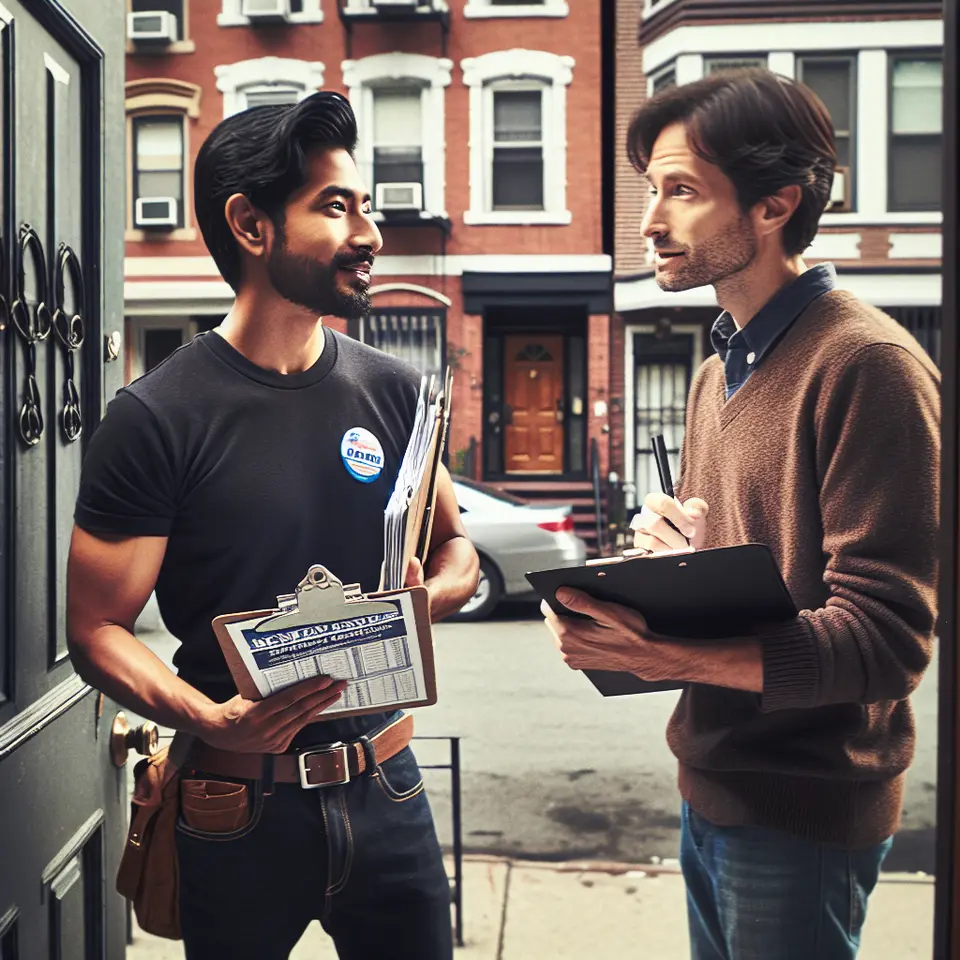
In New York City’s recent mayoral race, however, one campaign flipped that script. Instead of rigid talking points, canvassers were encouraged to have real, meandering conversations with voters. The campaign’s field director described the philosophy simply: focus on “trusting canvassers” to go off-script.
From a generative and data-driven perspective, this aligns with what research on persuasion and trust suggests: voters respond more strongly to authentic, two-way interaction than to polished but generic lines. The more a conversation reflects a voter’s own concerns and experiences, the more likely it is to influence turnout and support.
Case Study: A Conversation That Created a Volunteer
The article recounts a telling example. In October, canvassers knocked on the Manhattan apartment of Patrick Foster, a 49-year-old working for the state’s environmental conservation agency. What followed was not a rushed pitch, but a 20-minute conversation that wandered from the mayoral race to small talk and even campus politics at a Manhattan university.
Because the exchange felt relaxed and genuine, Mr. Foster invited the canvassers in and offered iced tea. The impact was twofold:
- He ultimately voted for the campaign’s candidate for mayor.
- The very next day, he became a volunteer himself, knocking on doors in a nearby public housing complex.
This illustrates a powerful multiplier effect: when canvassing feels human rather than transactional, voters can turn into messengers, expanding a campaign’s reach organically.
What This Signals for Democrats in 2026
Some Democratic strategists now see this victory as a field blueprint heading into 2026. The takeaway is not that message discipline is obsolete, but that relying solely on scripts can limit impact.
Instead, campaigns may benefit from a hybrid model:
- Clear, data-informed priorities and talking points.
- Training that equips volunteers to listen first, then respond in their own words.
- Space for unscripted dialogue that reflects local culture and voter identity.
By combining structure with flexibility, campaigns can both scale and personalize their voter contact efforts.
How Campaigns Can Implement This Strategy
If you are running or advising a campaign, consider these practical steps inspired by the article’s field approach:
- Train for values, not verbatim lines: Focus on core themes (e.g., housing, public safety, education) and teach volunteers how to connect them to real-life stories.
- Use simple prompts instead of scripts: Provide 3–5 key questions canvassers can ask, such as “What’s the biggest change you’d like to see in the city over the next four years?”
- Collect qualitative data: Encourage canvassers to note recurring issues or phrases voters use. These insights can inform messaging, digital content, and future visits.
- Reward depth over quantity: A 20-minute conversation that produces a committed supporter or volunteer may be more valuable than ten rushed interactions.
For local campaigns with limited budgets, this strategy is especially powerful because it trades expensive media for high-trust person-to-person outreach.
Ideas for Civic Organizers and Activists
You do not need to be part of a large citywide campaign to apply these lessons. If you are an organizer, activist, or community leader, you can experiment with:
- Listening canvasses: Knock on doors or make calls where your only goal is to ask residents what issues matter to them and how they feel about local leadership.
- Story exchanges: Pair volunteers so each shares why they care about local politics. This practice increases comfort with unscripted conversations.
- Follow-up events: Turn meaningful door conversations into invitations to house meetings, online town halls, or neighborhood forums.
As the article suggests, local political culture—in this case, New York City’s—can shape how open people are to long, informal conversations. Adapting tone and style to your community is essential.
Further Reading and Next Steps
To dive deeper into modern field strategies and relational organizing, explore:
- Resources on relational organizing and neighbor-to-neighbor outreach techniques.
- Guides on persuasion canvassing and data-driven voter targeting.
- Campaign case studies that analyze volunteer recruitment and field performance.
Use this article’s core lesson as a starting point: when people at the door are encouraged to be themselves—and to genuinely listen—political campaigns can become more human, more persuasive, and ultimately more effective.
Source: https://www.nytimes.com/2025/12/26/us/politics/democrats-canvassing-door-knocking.html
Leave a Reply