
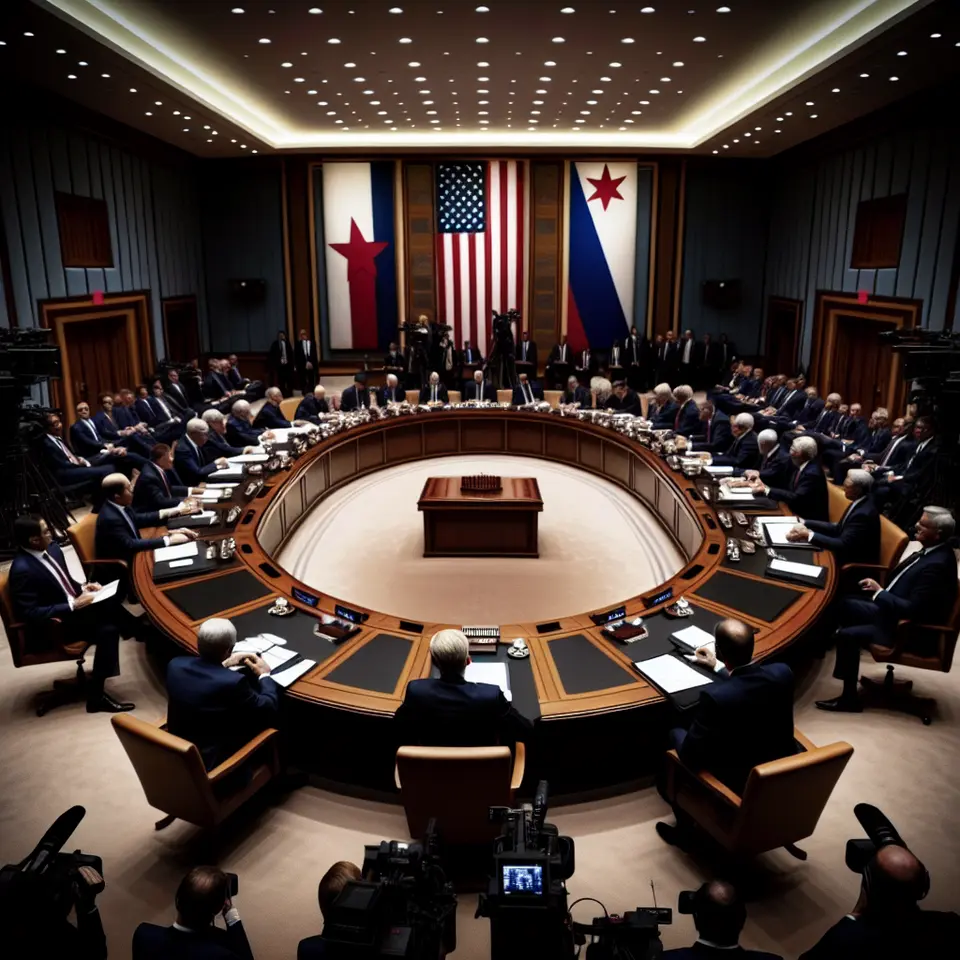
Trump, Zelenskyy, And The GOP’s ‘Heritage American’ Rift: What This Week Reveals About U.S. Politics
Estimated reading time: 5 minutes
Key Takeaways
- President Trump’s meeting with Ukrainian President Volodymyr Zelenskyy at Mar-a-Lago comes as Russia escalates missile and drone attacks on Kyiv.
- Zelenskyy has unveiled a 20-point peace plan, including security guarantees, a demilitarized zone, and a possible national referendum if Russia agrees to a 60-day ceasefire.
- Trump’s recent military actions in Nigeria and Venezuela highlight a tough-on-terror and tough-on-drugs posture that is also aimed at energizing his political base.
- Inside the GOP, a divisive debate over “heritage Americans” is sharpening tensions between white nationalist voices and other conservative leaders.
- These foreign policy moves and cultural fights may shape the Republican Party’s identity and electoral strategy heading into the 2026 midterms.
Table of Contents
- Trump–Zelenskyy Meeting In Florida
- Zelenskyy’s 20-Point Peace Plan
- Trump’s Moves In Nigeria And Venezuela
- The GOP’s America First Identity Rift
- The ‘Heritage Americans’ Debate On The Right
- Why It Matters For 2026 And Beyond
- Ideas For Further Reading & Exploration
Trump–Zelenskyy Meeting In Florida
President Trump is meeting Ukrainian President Volodymyr Zelenskyy at Mar-a-Lago in Palm Beach, Florida, where Trump is spending the holidays. The timing is striking: Russia has just launched a new wave of missile and drone attacks on Kyiv, underscoring how fragile any talk of peace remains.
This encounter follows an earlier, tense Oval Office meeting involving Trump, Zelenskyy, and Vice President Vance. The Florida setting offers a different stage, but the stakes are just as high: war, territory, and the future of Western support for Ukraine.
Zelenskyy’s 20-Point Peace Plan
Zelenskyy has released a 20-point plan to end the war. According to multiple outlets, the proposal includes:
- Security guarantees for Ukraine to deter future aggression.
- A demilitarized zone between Russia and Ukraine to manage contested territories.
- A commitment to consider a nationwide referendum in Ukraine, but only if Russia agrees to a 60-day ceasefire.
That ceasefire condition is the critical hinge. With Russia continuing to bombard Kyiv, Moscow’s willingness to pause attacks—and thereby enable political consultation inside Ukraine—remains deeply uncertain.
Trump’s Moves In Nigeria And Venezuela
While the Ukraine meeting grabs headlines, Trump is also projecting U.S. power elsewhere:
- Nigeria: On Christmas night, Trump announced U.S. strikes against ISIS targets in northwestern Nigeria, saying they were carried out with the Nigerian government’s consent. He framed them as retaliation for militants attacking Christians, though reporting has highlighted that militants there kill both Muslims and Christians, complicating the narrative of targeted Christian persecution.
- Venezuela: The administration has been striking boats it identifies as drug-trafficking vessels, with deadly consequences. What remains murky is the long-term objective: is this about counter-narcotics only, or a broader push toward regime change against President Nicolas Maduro?
Both sets of actions reinforce Trump’s preferred image: tough on terrorists, tough on drugs. They also resonate with parts of his base, including conservative Christians and voters who prioritize hardline security policies. Cultural influencers—like rapper Nicki Minaj, who has expressed sympathy for the MAGA movement—have amplified claims of Christian persecution in Nigeria, feeding into this narrative.
The GOP’s America First Identity Rift
Trump’s global moves are colliding with a core question inside the Republican Party: What does “America First” actually mean in practice?
Some populist conservatives argue that foreign interventions contradict the promise to prioritize domestic concerns. Former Trump ally Representative Marjorie Taylor Greene has openly questioned whether Trump is still genuinely America First, given recent overseas operations and the focus on conflicts far from U.S. borders.
This tension—between assertive global engagement and isolationist instincts—has become a defining fault line in the GOP coalition.
The ‘Heritage Americans’ Debate On The Right
Alongside foreign policy disputes, Republicans are wrestling with a raw cultural fight over identity. A key flashpoint is the concept of “heritage Americans”—the idea that people whose family lines stretch deep into U.S. history are more authentically American than those with more recent immigrant backgrounds.
Ohio GOP gubernatorial candidate Vivek Ramaswamy has pushed back on this notion, emphasizing a civic, rather than ancestral, definition of Americanness. On the other side are white nationalist figures like streamer Nick Fuentes, who champion lineage and race as central to national identity.
This clash over who counts as fully American intersects with ongoing debates over antisemitism, race, and nationalism. It exposes a widening gulf between overtly racist elements on the far right and other MAGA-aligned leaders trying to broaden their appeal without fully disavowing hardline supporters.
Why It Matters For 2026 And Beyond
The interplay of these stories—Ukraine peace talks, U.S. strikes in Nigeria and Venezuela, and the “heritage American” fight—will likely shape the GOP’s future:
- Foreign policy: Voters will be asked whether America should continue to assert force abroad or pull back to focus inward.
- Party identity: Republicans must decide if their brand of nationalism is civic and inclusive, or explicitly tied to race and ancestry.
- Election strategy: As the 2026 midterms approach, candidates will navigate these divides, determining how closely to align with Trump and how to address extremist voices in the movement.
For politically engaged readers, tracking how these debates evolve is essential to understanding where both the Republican Party—and American democracy—may be headed.
Ideas For Further Reading & Exploration
To deepen your understanding of these intersecting issues, consider:
- Following coverage on U.S.–Ukraine diplomacy, including updates on security guarantees and ceasefire negotiations.
- Exploring reporting on U.S. counterterrorism efforts in Africa and counter-narcotics operations in Latin America.
- Reading analyses on the rise of nationalist movements worldwide, and how debates over identity, race, and antisemitism are reshaping party coalitions.
As you explore more, ask yourself: How should a democracy balance security, values, and inclusion—both at home and abroad?
Source: https://www.npr.org/2025/12/28/nx-s1-5658294/politics-chat-trump-meets-zelenskyy-american-heritage-creates-gop-rift
Leave a Reply