
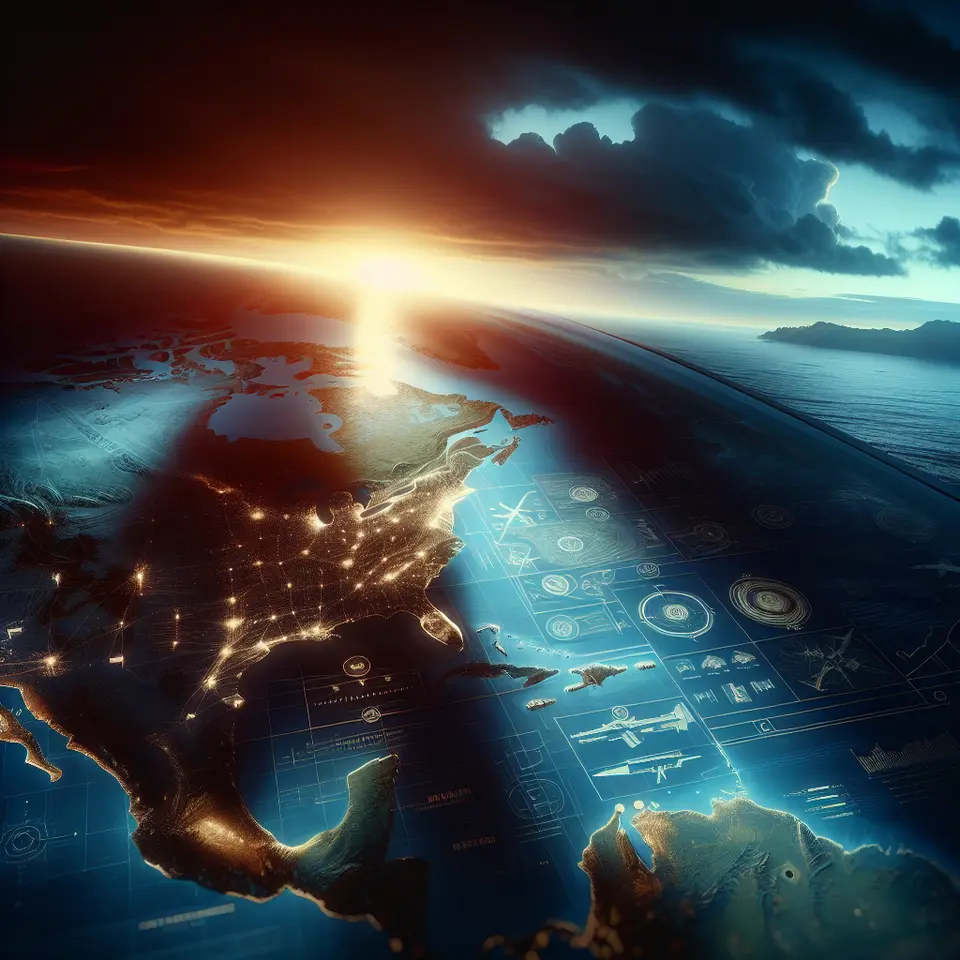
Trump’s Donroe Doctrine: A New Era of U.S. Military Posture in the Americas
Estimated reading time: 4–5 minutes
Key takeaways
- Shift toward military leverage signals a second-term emphasis on hard power in Latin America and nearby regions.
- Maduro’s capture and threats to Greenland and Iran show a broader, more explicit warning posture from Washington.
- The Donroe Doctrine reframes the Monroe Doctrine to deter foreign influence in the Americas and protect strategic assets.
- Domestic pushback includes a Senate resolution, while allies and opponents debate legal authorization and legitimacy.
Table of contents
- Overview of the Donroe Doctrine
- Recent actions in Venezuela and region
- Legislative response and legal questions
- Implications for nearby countries
- What to watch next
Overview of the Donroe Doctrine
The administration publicly describes a modern Donroe Doctrine to keep the Western Hemisphere “reasonably stable and well-governed” and to prevent hostile incursions or the loss of core assets. Citing threats from China’s influence in Latin America, the White House argues for a robust American presence to deter interference in the Americas.
Recent actions in Venezuela and region
Following the arrest of a Venezuelan president and his spouse in Caracas, officials warned that more targets could be named. The U.S. has conducted strikes against Islamist targets in Syria and Nigeria, and earlier actions linked to Venezuela have drawn both support and criticism. President Trump has also publicly discussed Greenland and the Panama Canal as leverage points.
Trump described Cuba as a failing state and warned of actions if narcotics trafficking and migration pressures continue. He named Colombia’s president with strong criticism but noted potential diplomatic outcomes.
“This is America first. This is peace through strength,” echoed by officials, underlines a broader strategy to “take care of what is close to home.”
Legislative response and legal questions
A bipartisan Senate resolution sought to curb unilateral strikes in Venezuela without congressional approval. Some Republicans joined Democrats in emphasizing restraint, while others stressed presidential prerogative. Officials argue the administration has offered off-ramps, though Maduro’s cooperation remains contested.
Implications for nearby countries
Analysts flag a potential pivot for Latin American policy—against narcotics, migration, and energy security. Mexico, Cuba, and Denmark’s Greenland are highlighted as strategic concerns, with the trajectory shaped by both diplomacy and deterrence.
What to watch next
Experts foresee a multi-year process to address the region’s challenges, with a focus on alliances, sanctions, and potential military options. The administration seeks a sizable budget increase for what it now terms the Department of War, signaling a sustained readiness posture.
Source: https://www.usatoday.com/story/news/politics/2026/01/10/trump-military-intervention-greenland-venezuela-iran/88033967007/
Leave a Reply