
Zohran Mamdani’s Bold Inauguration: What a Democratic Socialist Mayor Means for New York City
Estimated reading time: 4 minutes
Key Takeaways
- New York City’s new mayor, Zohran Mamdani, pledged to govern as an unapologetic democratic socialist, resisting pressure to move to the political center.
- His agenda centers on the working class, with proposals like universal childcare, “fast and free” buses, and a rent freeze for rent-stabilized tenants.
- Mamdani aims to fund his priorities by taxing the wealthiest residents and raising corporate taxes, which requires cooperation from the state legislature and governor.
- The inauguration doubled as a signal to the national Democratic Party that a leftward, pro-worker strategy might be politically viable.
- His first executive actions focused on housing and affordability, reinforcing his message that the city should belong to ordinary New Yorkers.
Table of Contents
- Mamdani’s Inauguration: A Clear Progressive Message
- Governing as a Democratic Socialist in a Complex City
- A Mayor Focused on Working-Class New Yorkers
- Why This Matters for National Democratic Politics
- First Steps: Housing, Affordability, and Symbolic Gestures
- How Readers Can Engage with These Issues
Mamdani’s Inauguration: A Clear Progressive Message
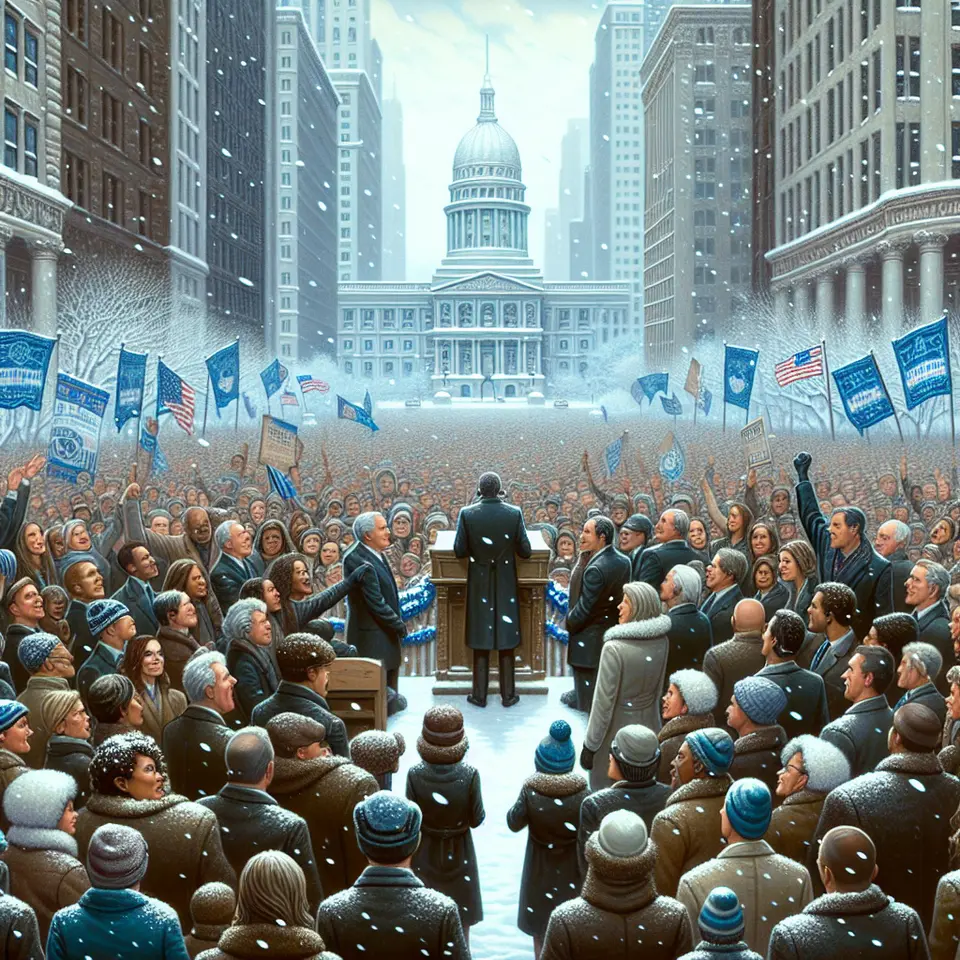
On a frigid January day in New York City, Zohran Mamdani used his inauguration to send a blunt message: the city has elected not just a new mayor, but a new kind of mayor. Rather than edging toward the political center, Mamdani doubled down on his identity, reminding New Yorkers that he was “elected as a democratic socialist” and promising to “govern as a democratic socialist.”
He rejected calls to temper expectations, saying he would not encourage New Yorkers to “ask for little and expect even less.” Instead, he vowed to reset what he called the city’s culture of “small expectations,” positioning his administration as a test case for whether the left can not only campaign, but also govern.
Governing as a Democratic Socialist in a Complex City
New York City is a sprawling, complex, and often divided metropolis, where governing typically requires compromise. During his campaign, Mamdani had already shown that he could moderate under pressure, backing away from past calls to defund the New York Police Department.
Yet his inaugural speech suggested a new phase. He cast the mainstream Democratic establishment as too cautious and unimaginative, arguing that what many label “radical” is in fact a response to deep inequalities. Citing a famous line from Sen. Bernie Sanders — who administered his public oath of office — Mamdani pushed the idea that the real extremism lies in “a system which gives so much to so few and denies so many people the basic necessities of life.”
A Mayor Focused on Working-Class New Yorkers
Throughout the day, Mamdani’s focus remained firmly on the working class and the labor movement. The performance of the “Bread and Roses” anthem — a historic workers’ rights rallying cry — framed his agenda around the idea that people deserve both security (bread) and dignity or beauty (roses).
His proposed policies reflect that focus:
- Universal childcare to ease the burden on working families.
- “Fast and free” city buses to improve mobility and reduce transportation costs.
- Rent freezes for rent-stabilized tenants to combat the affordability crisis.
To pay for this, Mamdani wants to increase taxes on the city’s wealthiest residents and raise the corporate tax rate. Importantly, these changes cannot be enacted by the city alone — they require alignment with the New York State legislature and governor, adding a strategic layer to how his agenda might unfold.
Why This Matters for National Democratic Politics
Mamdani’s victory has quickly become a case study in the ongoing debate within the Democratic Party: Should the party move left and lean into economic populism, or hold the center?
His win — and his decision to embrace, rather than dilute, his democratic socialist identity — raises key questions for strategists watching the upcoming midterm elections. If a candidate openly promising higher taxes on the wealthy, aggressive affordability policies, and a strong pro-labor stance can govern the nation’s largest city, it could embolden similar campaigns in other urban centers.
For politically engaged readers, this moment is a live experiment in whether city-level governance can shift national narratives on inequality, housing, and public services.
First Steps: Housing, Affordability, and Symbolic Gestures
Mamdani’s early actions aimed to prove his rhetoric is backed by real policy. Just hours after his speech, he traveled to Brooklyn to sign a series of housing-focused executive orders, underscoring his commitment to tackling New York’s affordability crisis immediately.
The day closed with a telling image: as crews dismantled the inauguration setup outside City Hall in the cold, Mamdani stood behind a folding table handing out hot chocolate to workers. While symbolic, that moment aligned with the narrative he is building — a mayor who stands with the people doing the city’s hardest, least visible work.
For residents, renters, and workers, the question now is whether these early moves will translate into measurable change in rents, transit access, and everyday living costs over the next four years.
How Readers Can Engage with These Issues
Whether you live in New York or follow urban policy from afar, there are practical ways to engage with what Mamdani’s administration represents:
- Track affordability metrics: Follow trends in rent, childcare costs, and transit reliability in your area to compare outcomes over time.
- Explore policy case studies: Look up reports from think tanks and city agencies on universal childcare, fare-free transit, and rent regulation to see what has worked elsewhere.
- Join local conversations: Attend community board meetings, tenant associations, or labor events in your own city to understand how similar debates are playing out locally.
- Follow related coverage: Seek out additional reporting on New York’s affordability crisis, policing reforms, and labor movements to build a fuller picture of the stakes involved.
By engaging with these issues, readers can better understand not just one mayor’s agenda, but the broader question at the heart of American politics today: can bold, left-leaning policies deliver for ordinary people at scale?
Source: https://www.cnn.com/2026/01/01/politics/zohran-mamdani-speech-progressive-mayor
Leave a Reply