
Nicki Minaj, Trump-Era Politics, and What It Reveals About Black Voters
Estimated reading time: 4 minutes
Key Takeaways
- Nicki Minaj’s appearance at Turning Point USA’s AmericaFest spotlighted her growing alignment with Trump-era conservative politics.
- Her evolving political messages, from lyrics to social media posts, reflect a long-running tension between celebrity branding and community expectations.
- Speculation about motives includes unfounded theories related to her husband’s legal history and the broader politics of presidential clemency.
- The backlash from Black audiences highlights deeper debates over misinformation, LGBTQ+ rights, immigration, and criminal justice.
- Understanding this moment can help readers better interpret how pop culture, social media, and politics shape Black public opinion.
Table of Contents
- Is Nicki Minaj Really Shifting Politically?
- A Timeline of Minaj’s Political Comments
- Speculation, Clemency, and Her Husband’s Legal History
- Why Black Social Media Is Paying Attention
- How to Go Deeper on Clemency and Criminal Justice
Is Nicki Minaj Really Shifting Politically?
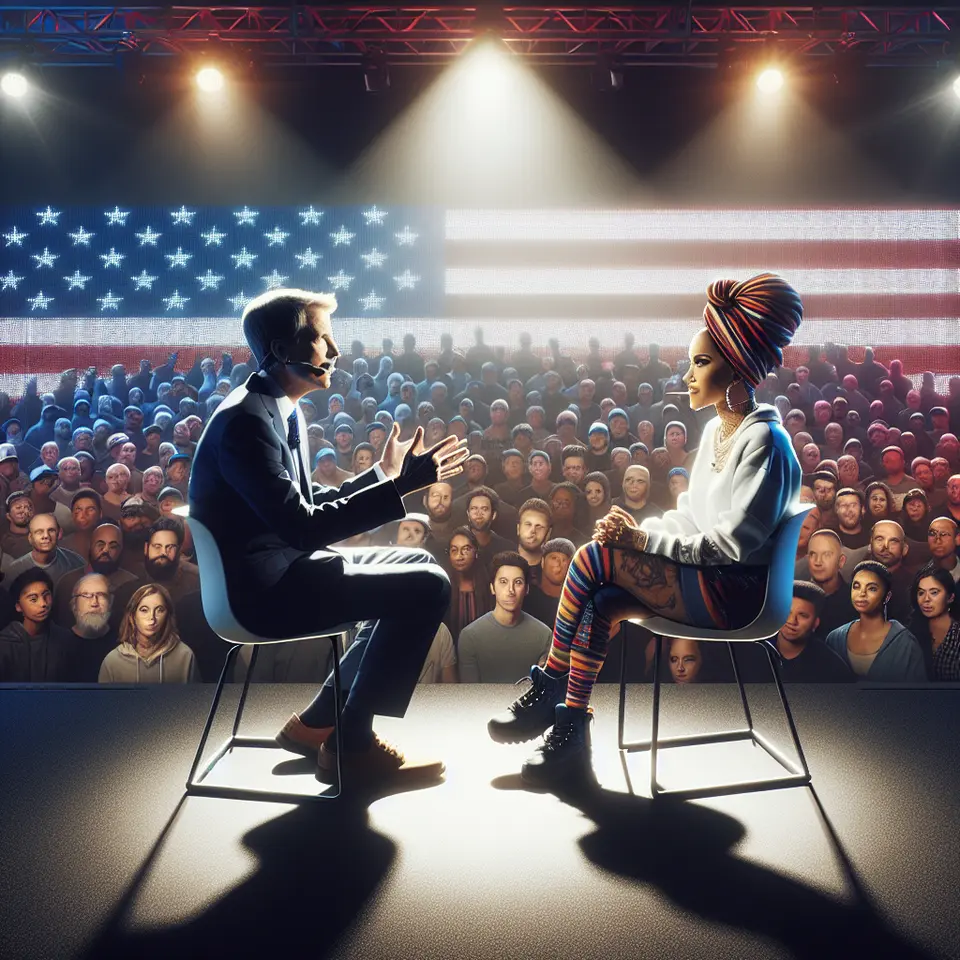
As 2025 winds down, Nicki Minaj is trending not for a new album, but for her appearance at Turning Point USA’s AmericaFest in Phoenix. Sitting on stage with Erika Kirk, widow of right-wing activist Charlie Kirk, the rapper praised former President Donald Trump and Vice President JD Vance, signaling a visible embrace of Trump-era politics.
This has triggered intense discussion across Black social media feeds. Many longtime fans are asking a simple but loaded question: Has Nicki Minaj actually become a Trump-aligned conservative, or is this a strategic moment in her brand evolution?
A Timeline of Minaj’s Political Comments
Minaj’s political messaging did not begin in 2025. Her public record shows a pattern of provocative, sometimes contradictory statements:
- 2012: On Lil Wayne’s “Mercy,” she rapped, “I’m a Republican voting for Mitt Romney,” in what many interpreted as satire.
- 2015: In a Billboard interview, she suggested some of Trump’s points might not be “so horrible” if his approach were less “childish.”
- 2016: On “Black Barbies,” she appeared to push back on anti-immigrant rhetoric: “Island girl, Donald Trump want me go home.”
- 2018: She criticized family separation at the border under Trump’s administration, aligning with immigrant rights advocates.
- 2021: Her comments about COVID vaccines drew widespread criticism for spreading misinformation.
- 2025: She addressed the United Nations with U.S. Ambassador Mike Waltz, amplifying concerns that Christians in Nigeria are being killed “in very large numbers” by Islamist extremists, echoing Trump-era talking points.
Her AmericaFest interview added new layers, including praise for Trump and Vance and a moment where she labeled Vance an “assassin,” a loaded term given that some conservatives have described Charlie Kirk’s death as an “assassination.” Erika Kirk brushed it off, telling the crowd to “laugh about it,” but the clip fueled further online debate.
Speculation, Clemency, and Her Husband’s Legal History
Online, some users have speculated — without evidence — that Minaj’s proximity to Trump-aligned groups might be linked to her husband Kenneth Petty’s legal status. Petty was convicted in federal court in 2022 for failing to register as a sex offender after moving to California.
To understand why these theories circulate, it helps to look at the broader clemency landscape:
- Trump granted at least 1,500 pardons and commutations to Jan. 6 defendants and others.
- There are over 19,000 pending clemency applications at the Department of Justice’s Office of the Pardon Attorney, some dating back to 2009.
- Only 17 people were granted clemency through the formal DOJ application process during Trump’s term, according to a report from Rep. Ayanna Pressley’s office: “Trump’s Clemency Gap: How Trump’s Pardons Are Ignoring The People Who Need Them The Most.”
While none of this proves any connection to Minaj’s family, it helps explain why fans link her political visibility to debates over who gets mercy from the system — and who does not.
Why Black Social Media Is Paying Attention
Minaj has long been embraced as a cultural icon for Black women and Caribbean diasporic communities. That history shapes today’s reactions. Her recent actions include:
- Refusing in 2020 to “join the Trump bandwagon,” then shifting to warmer comments in 2025.
- Sharing an anti-trans post from the White House’s social media channels.
- Engaging in an online feud with California Gov. Gavin Newsom over his support for transgender youth.
For many Black audiences, these moves are not isolated. They intersect with fears about rising anti-trans legislation, anti-immigrant rhetoric, and the spread of misinformation in communities already facing systemic inequities.
If you are a fan trying to process this shift, you might ask yourself:
- How do I separate my love for the music from my concerns about the politics?
- What sources am I using to fact-check claims about vaccines, immigration, or crime?
- How do celebrity endorsements influence my views on elections or policy?
How to Go Deeper on Clemency and Criminal Justice
This story sits at the crossroads of pop culture and policy, especially around clemency and criminal justice reform. To build your own informed perspective, consider exploring related reporting from Capital B:
- What a ‘Pardon Czar’ Could Accomplish During a Trump Administration
- Despite Pardons, Many Formerly Incarcerated Black People Still Face Uncertainty
- Maryland Governor’s Marijuana Pardons a Win for Justice, But Is It Enough?
For a more personalized approach, you can:
- Track how often celebrities you follow share political content — and make a habit of verifying claims with nonprofit news outlets and primary data.
- Learn basic terminology around pardons, commutations, and clemency applications so you can better interpret headlines.
- Subscribe to community-rooted outlets like Capital B to get context that centers Black experiences rather than partisan talking points.
Ultimately, Nicki Minaj’s AmericaFest appearance is more than a viral moment. It is a window into how power, celebrity, and policy collide — and an invitation for Black audiences to ask who benefits when star power is leveraged for a particular political project.
Source: https://capitalbnews.org/nicki-minaj-erika-kirk-clemency/
Leave a Reply