How New York’s Growing Muslim Community Helped Elect Its First Muslim Mayor
Estimated reading time: 5 minutes
Key Takeaways
- New York’s Muslim population is surging, with estimates reaching up to 1 million residents and rapidly expanding communities in the Bronx, Queens, Brooklyn and Staten Island.
- Muslim and immigrant voters were central to Zohran Mamdani’s 2025 mayoral victory, helping elect the city’s first Muslim and South Asian mayor.
- Muslim communities are driving both political change and local economic growth, revitalizing corridors like Little Yemen, Little Pakistan and parts of Queens.
- Support for Mamdani is fueled by his focus on affordability, housing, transit, and immigrant protections, even as some Muslim voters hold more conservative views on policing and social issues.
- Community leaders now expect concrete policy shifts, from school prayer accommodations to police reform and more Muslim representation in city government.
Table of Contents
- Rising Muslim Political Power in New York City
- How Big Is New York’s Muslim Community?
- Why Muslim Voters Backed Zohran Mamdani
- Neighborhoods Transformed: From Little Yemen to Little Pakistan
- What Muslim Leaders Want from City Hall
- Tensions, Identity, and Building Bridges
- How You Can Engage With These Shifts
Rising Muslim Political Power in New York City
New York has long been shaped by waves of Dutch, Irish, Italian, Jewish and Black communities. Today, Muslims are emerging as a distinct and influential political force. The 2025 election of 34-year-old Assembly member Zohran Mamdani as mayor marked a historic turning point: he is the city’s first Muslim and South Asian mayor, elected on a platform that blended faith-informed values, democratic socialism and a strong focus on everyday economic struggles.
For many Muslim New Yorkers who felt surveilled, marginalized or politically invisible in the post-9/11 era, his victory signaled a new kind of representation. As one Brooklyn resident put it, they finally “feel the power to speak.”
How Big Is New York’s Muslim Community?
Because the U.S. Census does not track religion, estimates vary. The Council on American-Islamic Relations (CAIR) places the city’s Muslim population around 1 million people, or roughly 12 percent of residents. This would mark an increase of about 250,000 over the past decade.
Other research, including from the Public Religion Research Institute, suggests lower percentages overall but confirms notable concentrations in the Bronx, Brooklyn, Queens and Staten Island. In some boroughs, Muslims now outnumber Jewish residents.
On the voter side, Desis Rising Up and Moving (DRUM) has identified about 307,000 registered Muslim voters, up from 245,000 in 2021. Their analysis found Muslims are roughly 7 percent of registered voters, yet accounted for about 14 percent of ballots cast in the 2025 mayoral election—evidence of high engagement and turnout.
Why Muslim Voters Backed Zohran Mamdani
Muslim New Yorkers are far from monolithic. They include South Asians, Indo-Caribbeans, Arabs, Africans and African Americans with a wide range of political views. Yet several themes helped unify support behind Mamdani:
- Economic stress: Voters repeatedly cited skyrocketing rent, food prices and basic living costs. Mamdani’s promises to freeze rents on stabilized apartments, expand free buses and pursue universal child care resonated across communities.
- Values alignment: Some leaders drew parallels between Islamic teachings and Mamdani’s “socialist” emphasis on guaranteeing food, clothing, education, health and shelter.
- Foreign policy and identity: His outspoken stance against Israel’s war in Gaza and commitment to protect undocumented immigrants from federal immigration enforcement energized many Muslim voters and younger activists.
At the same time, the article highlights that some Muslims remain more conservative on policing, cultural issues and regulation, showing that support for Mamdani is broad but not unconditional.
Neighborhoods Transformed: From Little Yemen to Little Pakistan
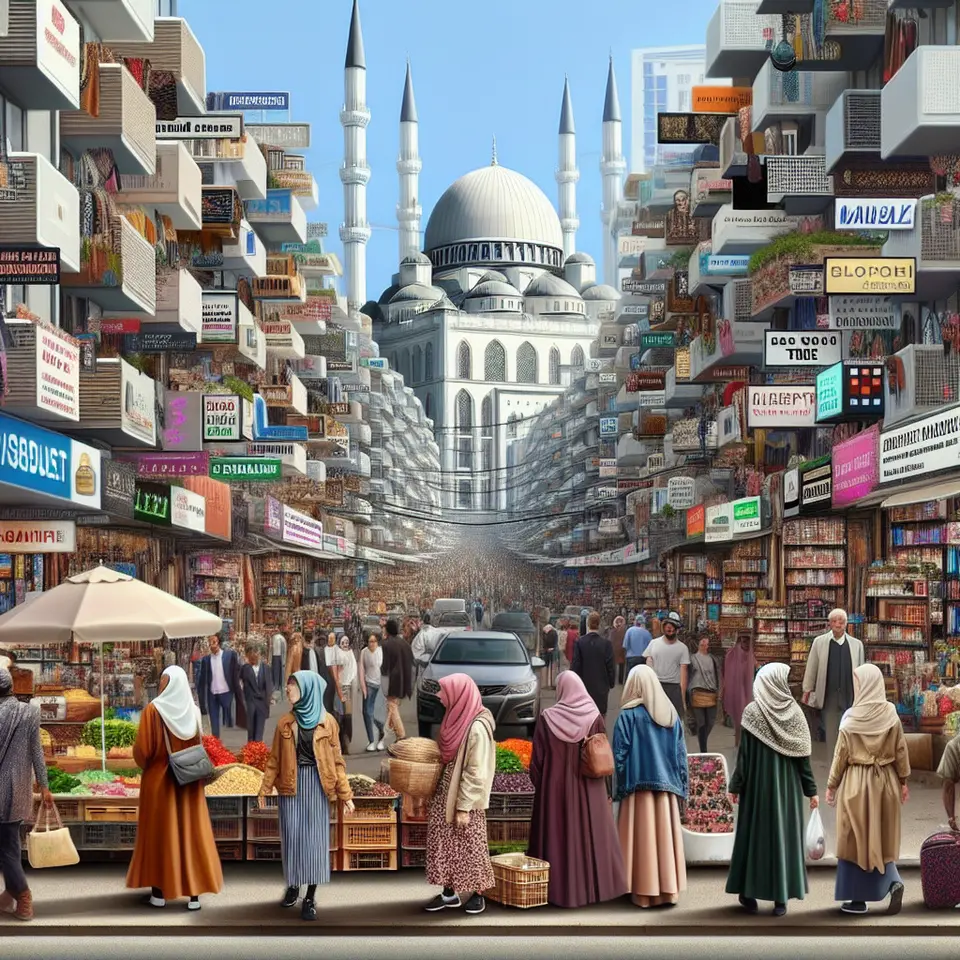
One of the most striking dimensions of this shift is visible at street level. New mosques, halal markets and cultural centers are reshaping entire corridors:
- Little Yemen, Bronx: Around the Bronx Muslim Center in Morris Park, Yemeni-owned food markets, clothing shops and businesses now dominate stretches of White Plains Road. A new 32,000-square-foot mosque, set to be the largest in New York state, is under construction to serve thousands of worshipers.
- Eastern Queens: In Jamaica, the Bangladeshi community has grown fivefold since 2000. Mosques like Darul Uloom New York, also a madrassa for about 500 children, are community anchors.
- Southern Brooklyn: Neighborhoods such as Bay Ridge and Sunset Park host robust Arab and Muslim populations, with busy community centers and overcrowded prayer spaces that spill into multiuse rooms.
- Little Pakistan, Midwood: Coney Island Avenue, once known mainly for surveillance after 9/11, is now an organizing hub. Between Mamdani’s primary and the general election, more than 1,600 people there registered to vote, and precincts with heavy Pakistani American populations gave him roughly 70 percent support.
These changes are not just cultural. Business districts like Morris Park now boast lower vacancy rates than some wealthier Manhattan shopping corridors, driven largely by Middle Eastern and North African entrepreneurs.
What Muslim Leaders Want from City Hall
With representation comes expectation. Community groups and advocates are outlining specific priorities for the new administration, including:
- Religious accommodations in schools: CAIR leaders want explicit, citywide recognition of Muslim students’ right to pray in public schools.
- Police practices and protest rights: Advocates are pressing for new ground rules around the NYPD’s Strategic Response Group, which has been criticized for aggressive tactics at demonstrations, including protests over Gaza.
- Inclusive hiring: There is a push to see Muslims represented “at all levels” of municipal government, not just in symbolic roles.
- Foreign policy linkages: Some leaders plan to hold the new mayor to his rhetoric on weakening certain city ties with Israel, a stance that is already prompting concern among prominent Jewish leaders.
These goals sit alongside internal debates, particularly in communities that favor more policing or more conservative educational content. Voters like those in Little Yemen, for example, support law enforcement and lighter regulation while still backing Mamdani on core economic issues.
Tensions, Identity, and Building Bridges
The article also surfaces anxieties from Jewish leaders who fear that rising anti-Zionism could fuel broader hostility toward Jews. Some worry that a firm ideological rejection of Israel’s right to exist as a Jewish state could bleed into local antisemitism, especially in a tense political climate.
At the neighborhood level, demographic shifts occasionally spark friction—such as youth clashes with police or inflammatory slogans shouted on the street. Yet these flashpoints are counterbalanced by stories of cooperation: property values rising for longtime homeowners, shared holiday decorations, and neighbors greeting each other as “brother.”
For readers, the takeaway is that demographic change is complex: it can create both moments of conflict and opportunities for deeper solidarity if city leadership and communities invest in dialogue and shared economic progress.
How You Can Engage With These Shifts
If you live in a diverse city—or are simply curious about how faith and demographics shape politics—this story offers several practical ways to engage:
- Explore local neighborhoods: Visit districts like Little Yemen or Little Pakistan in your own city, support family-run businesses, and learn about their histories.
- Follow community organizations: Groups like CAIR, DRUM, and local business improvement districts often publish reports, host town halls, and share data on voter engagement and neighborhood change.
- Stay civically active: Whether you agree with Mamdani’s platform or not, the surge in Muslim voter turnout shows how targeted organizing can reshape city politics. Consider joining or starting issue-based coalitions focused on housing, transit, school policy or civil rights.
- Learn across differences: If debates over Israel, policing or education matter to you, seek out forums that bring together Muslim, Jewish and other community voices for structured, respectful conversation.
By understanding how New York’s Muslim population is reshaping both local streets and citywide politics, readers everywhere can better anticipate how similar demographic and political shifts may play out in their own communities.
Source: https://www.washingtonpost.com/nation/2026/01/01/muslims-new-york-mamdani-politics/
Leave a Reply