Why Zohran Mamdani’s New York Block Party Proves People Want More Politics
Estimated reading time: 5 minutes
Key takeaways
- Zohran Mamdani’s inauguration as New York City mayor was designed as a mass-participation block party, signaling a new, more inclusive style of governance.
- His movement rejects the old neoliberal idea that politics should “get out of the way” and instead treats government as a vehicle for solidarity and universal welfare.
- From city-wide scavenger hunts to open jobs portals, Mamdani’s team treats participation tools as core political infrastructure, not campaign gimmicks.
- The article contrasts this “more politics” approach with leaders who promise quiet, technocratic government that leaves a dangerous vacuum for demagogues.
- Whether this experiment succeeds will depend on delivering real material gains quickly enough to match the expectations Mamdani’s movement has raised.
Table of contents
- Mamdani’s inauguration: a block party, not a closed ceremony
- Beyond the neoliberal void: why people feel shut out of politics
- Participation as governance, not marketing
- A sharp contrast to “quiet” politics
- What this shift means for everyday New Yorkers (and you)
- How you can engage more deeply in politics where you live
Mamdani’s inauguration: a block party, not a closed ceremony
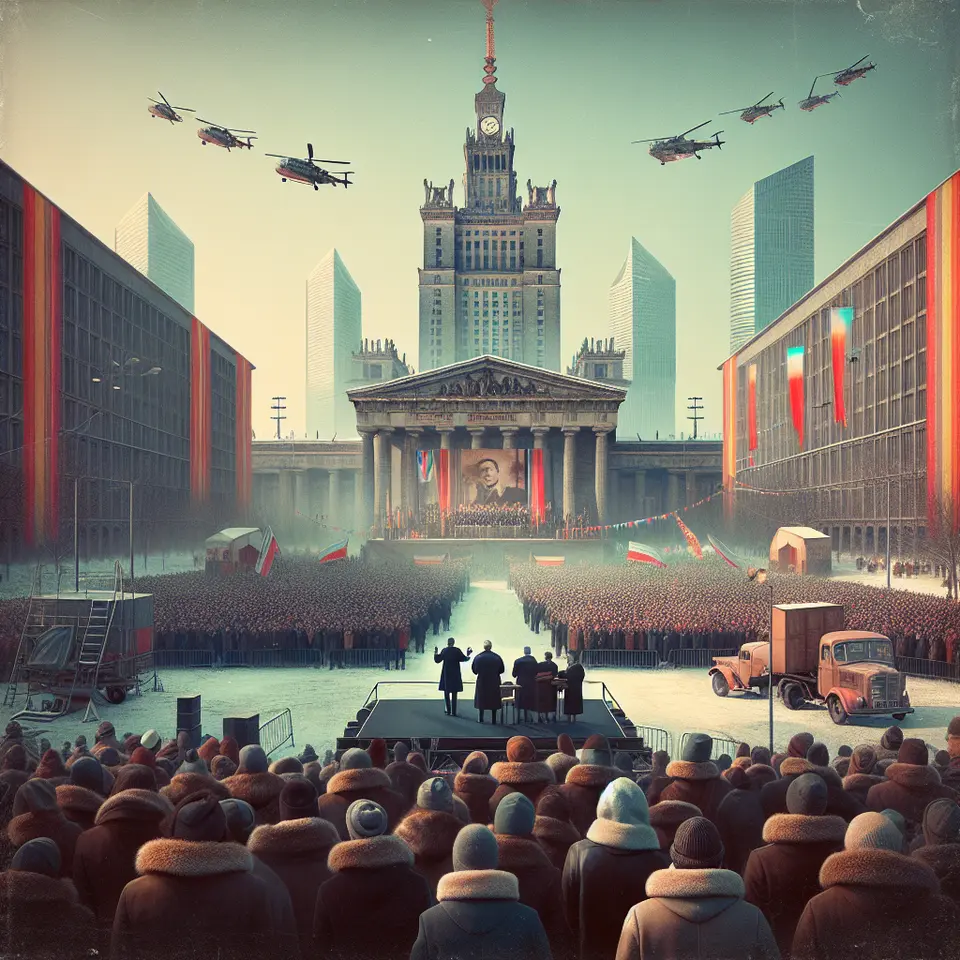
On 1 January 2026, when Zohran Mamdani was sworn in as New York City’s 112th mayor, City Hall looked less like a traditional inauguration and more like a citywide festival. A nearby Manhattan street was closed to traffic so tens of thousands could watch his speech on giant screens in a block-party atmosphere, under a cold blue sky that felt both celebratory and sobering.
This wasn’t accidental. It reflected a core belief of Mamdani’s campaign: politics should be something people do together, not something done to them. Instead of an exclusive, invitation-only event, the new mayor opened the city’s front door and invited everyone in.
Beyond the neoliberal void: why people feel shut out of politics
The article situates Mamdani’s rise against decades of western politics defined by a “negative image” of government. Leaders from Ronald Reagan to Tony Blair framed the state as a necessary evil, best when absent. Welfare became stigmatized, voter turnout stagnated, and party memberships hollowed out.
Political scientist Peter Mair described this as “ruling the void”: governments managing a disengaged public that expects little and receives even less. That vacuum has often been filled by scandal, disillusionment and, increasingly, by rightwing populists who promise to speak for “the people” without actually deepening democratic participation.
Participation as governance, not marketing
What makes Mamdani’s project distinctive is how systematically he tries to replace that void with genuine involvement:
- Street interviews in swing neighborhoods (Queens and the Bronx) to hear directly from communities that had moved toward Donald Trump.
- Mass volunteer mobilization for canvassing and door-knocking, with volunteers publicly celebrated as the engine of the campaign.
- City-wide scavenger hunts and football tournaments that turned civic engagement into shared play, not just policy talk.
- An open jobs portal after his victory, drawing about 74,000 applications from people eager to shape the new administration.
- Marathon listening sessions with 15-minute slots over 12 hours, inviting New Yorkers to present their problems directly.
These are not treated as one-off stunts; they are portrayed as part of a governing philosophy that aims to pair universalist welfare policies—free childcare, free buses for all, a rent freeze on rent-stabilised apartments—with constant civic involvement.
As the article notes, Mamdani’s team insists that “the campaign can’t end.” The same people who got him elected are meant to be partners in governing.
A sharp contrast to “quiet” politics
To highlight how different this is, the author contrasts Mamdani with UK prime minister Keir Starmer, who has argued that people want politics to “tread a little lighter on all of our lives” after years of chaos. That vision promises calm but risks recreating the very void that discredited mainstream parties in the first place.
In that empty space, louder actors—often from the far right—step in with simple stories and easy enemies. Trump and Nigel Farage are cited as figures who, while not genuinely democratic, have made supporters feel involved through rallies and digital mobilization.
Mamdani instead leans into the noise. His inauguration, framed by chants of “tax the rich” and supported by figures like Alexandria Ocasio-Cortez and Bernie Sanders, declares that politics will be “loud” and “different,” an ongoing collaboration rather than a background hum.
What this shift means for everyday New Yorkers (and you)
For New Yorkers, the stakes are concrete. If policies like free childcare, public transport access and rent protections materialize, they could quickly change daily life—especially for working-class families pushed to the brink by housing and living costs.
But expectations are high. Commenters quoted in the piece warn that if rapid, visible transformation doesn’t arrive, enthusiasm could sour fast. The same movement energy that fuels hope can, if disappointed, tip into anger.
Still, the central lesson travels beyond New York: many people do not actually want less politics. They want better politics—collective projects they can join, not distant institutions they tolerate.
How you can engage more deeply in politics where you live
If Mamdani’s experiment resonates with you, consider how to bring elements of this “more politics” model into your own context:
- Join or start local listening sessions: neighborhood assemblies, town halls, or online forums where residents set the agenda.
- Turn politics into practice: participate in mutual aid groups, renters’ associations, or school committees that link policy to daily life.
- Collaborate with campaigns: look for movements that genuinely share power with volunteers—through strategy meetings, open hiring calls, and accessible leadership.
- Create social, not just electoral, spaces: like Mamdani’s scavenger hunts and sports events, pair civic engagement with culture, games, and food to build lasting ties.
For deeper exploration, you might seek out related pieces on participatory democracy, universal welfare programs, and movement-based governance models. Pair this reading with local data—on turnout, housing, or public services—to see where you live might benefit from “more politics, not less.”
Leave a Reply