
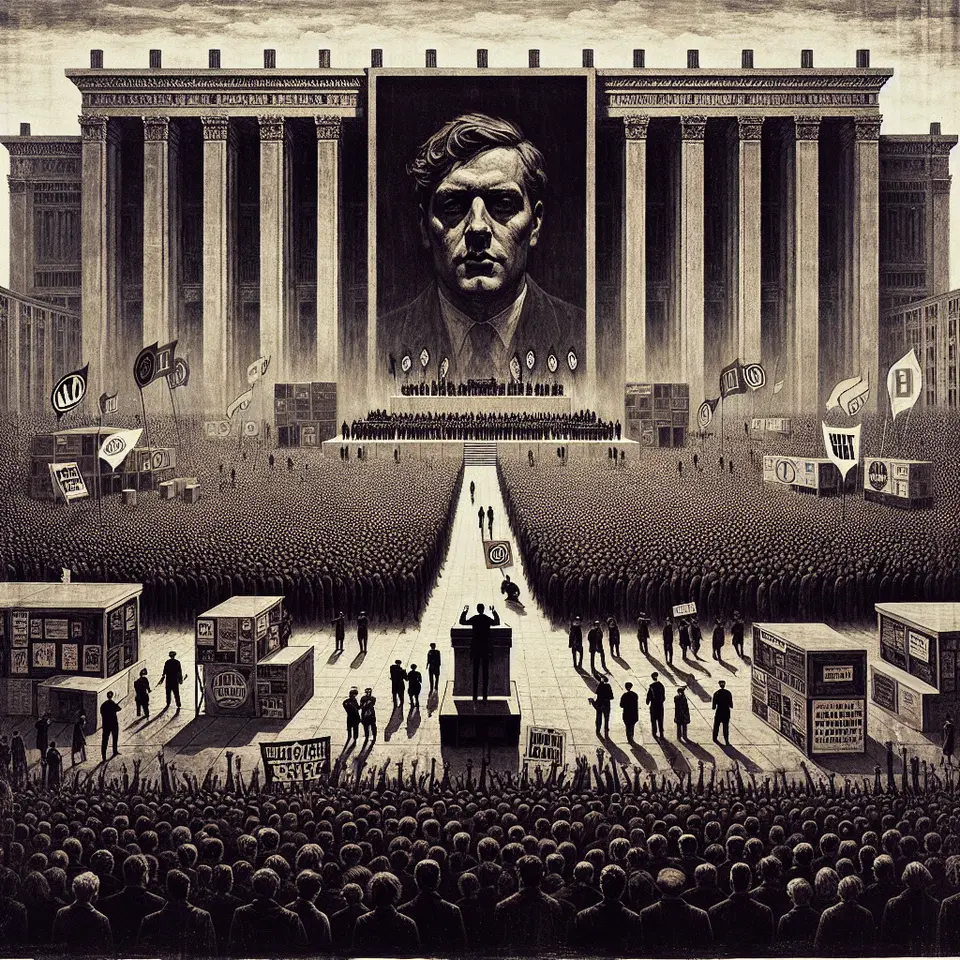
Cults of Personality in Indian Politics: Why Leaders Outshine Institutions
Estimated reading time: 5 minutes
- Personality-driven politics increasingly defines India’s democracy, from national to local elections.
- The prime minister’s image dominates the Bharatiya Janata Party (BJP), shaping how voters perceive every ballot cast for the party.
- This leader-first mindset sidelines institutions, party structures, and collective accountability.
- Such cults of personality are now common across parties and states, not just in national politics.
- For citizens, understanding this shift is key to evaluating policy, governance, and democratic resilience.
Table of Contents
- The Rise of Personality Politics in India
- How One Leader Defines an Entire Party
- What This Means for Democratic Institutions
- Cults of Personality Beyond National Politics
- What Voters Should Watch For
- Further Reading and Exploration
The Rise of Personality Politics in India
In a Westminster-style parliamentary system like India’s, voters technically choose members of Parliament, not the head of government directly. Yet in practice, national elections increasingly resemble a presidential-style contest centered on a single leader’s charisma, narrative, and image.
The article highlights how, after nearly 12 years in power, the current prime minister has become a once-in-a-generation political phenomenon. His appeal cuts across class, caste, and language, illustrating how personality can override traditional social and political divides.
“Every vote cast for the BJP is a vote for the prime minister” – this captures the essence of India’s current political psychology.
For readers tracking democratic trends, this signals a deeper shift: from party platforms and local candidates to a politics dominated by personal branding and emotional connection to a single figure.
How One Leader Defines an Entire Party
The article describes how the prime minister has become the face of the BJP at every level:
- National elections
- State assembly contests
- Even local body campaigns
In marketing terms, the BJP’s “brand equity” is now tightly bound to one individual. Even in constituencies where voters never directly see him on the ballot, campaign messaging suggests that supporting the party is synonymous with endorsing his leadership.
For politically engaged readers, this matters because it changes how elections are fought and won. Local performance, candidate quality, and constituency issues can be overshadowed by a singular national narrative built around a leader’s image.
What This Means for Democratic Institutions
Personality-driven politics can be energizing: it simplifies choices and creates a clear story for voters. But the article underlines a crucial cost: institutions become secondary.
When every victory is credited to one leader, institutions such as:
- Political parties
- Cabinets and collective decision-making
- Parliament and state assemblies
start to lose visibility and, potentially, authority. Policy becomes associated with the will of a single figure, rather than with debate, checks and balances, or institutional continuity.
For citizens and analysts, a useful guiding question is:
“If this leader left tomorrow, would the system still function confidently and predictably?”
Cults of Personality Beyond National Politics
A key insight from the article is that cults of personality are not limited to one leader or one party. They pervade multiple layers of Indian politics:
- Regional parties built around powerful state leaders
- Dynastic political families with strong name recognition
- Local strongmen whose personal influence outweighs party ideology
This creates a political landscape where individuals, not institutions, are the primary carriers of trust, loyalty, and aspiration. For younger voters, this may feel normal, but historically it marks a shift away from programmatic, ideology-driven politics.
What Voters Should Watch For
If you are a voter, researcher, or student of democracy, the trends described in the article suggest several practical checkpoints:
- Scrutinize institutions: How often are party decisions, laws, or policies debated openly versus simply framed as extensions of a leader’s will?
- Track succession planning: Do parties cultivate new leaders and internal democracy, or only reinforce one central figure?
- Compare rhetoric and results: Are campaigns focused on personality or measurable outcomes such as employment, infrastructure, and public services?
Using these lenses can help you evaluate whether personality politics is enhancing accountability or eroding it.
Further Reading and Exploration
To deepen your understanding of cults of personality and institutional resilience, consider:
- Comparing India’s experience with other parliamentary democracies where leaders overshadow parties.
- Exploring scholarship on charismatic authority and democratic backsliding.
- Following reputable outlets that regularly examine South Asian politics and governance.
As you read more, try keeping a simple personal “democracy notebook” where you log examples of:
- Leader-centric campaign messages
- Institution-building reforms (or the absence of them)
- How media narratives frame political credit and blame
This reflective approach can help you move from passive consumption of political news to an active, informed reading of India’s evolving democracy.
Source: https://www.economist.com/asia/2025/12/30/cults-of-personality-pervade-all-levels-of-indian-politics
Leave a Reply