
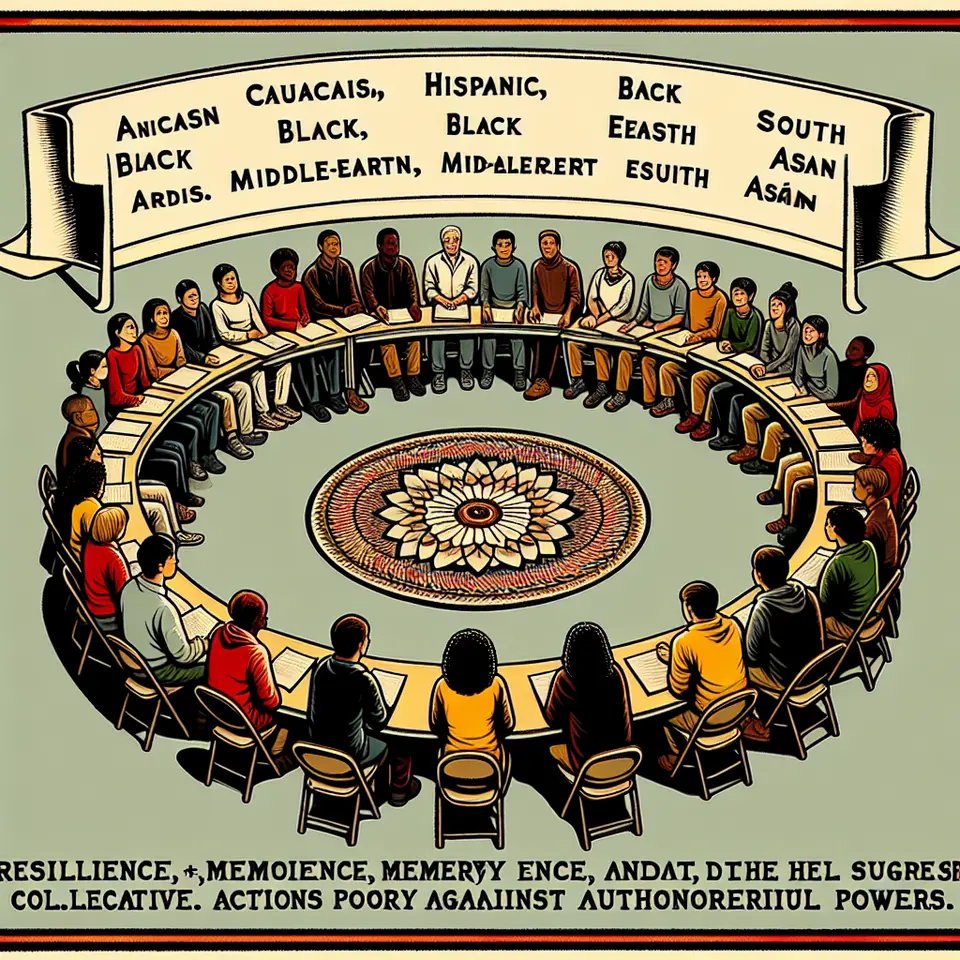
Critical Education in the Age of Trump’s Fascist Politics: Protecting Democracy in the Classroom
Estimated reading time: 7 minutes
Key takeaways
- Disinformation fuels authoritarianism: a strategic distortion of truth turns dissent into treason and normalizes state violence.
- Universities as public goods: neoliberalism and political pressure push higher education toward certification and control, threatening democratic cultivation.
- Critical pedagogy as resistance: memory, inquiry, and civic courage are essential to reclaim classrooms as sites of justice.
- Historical parallels matter: lessons from Freire, Bhabha, Castoriadis, Hedges, and others illuminate how education can challenge or reproduce power.
- Active student and faculty solidarity: teach-ins, assemblies, dissertations of dissent, and sanctuary classrooms are modern forms of resistance.
Disinformation: The Impetus for Authoritarianism
We live in a dangerous historical moment when fascist politics occupy centers of power. Across the globe, regimes hollow out democracy by merging violence with spectacle and turning education into a battlefield over truth itself. The article notes a culture of lies, including Trump’s more than 30,000 lies during his first term and ongoing denial of his 2020 loss, to mask tyranny.
Disinformation is weaponized, with examples such as a senator blaming “Marxists” for a murder related to a Trump supporter and media outlets laundering language to shield illegality. This strategy widens the gap between truth and policy, preparing publics for unchecked power and state violence.
The Collapse of Critical Education
The neoliberal university has outsourced democracy to market logic, prioritizing credentialing, metrics, and austerity over inquiry and civic citizenship. Higher education becomes vulnerable to white Christian nationalist indoctrination, with curricula being surveilled and dissenting scholarship suppressed. The piece cites real-world pressure on Columbia, Harvard, Brown, and Northwestern, including funding threats and investigations, mirroring historical fascist patterns in Nazi Germany, Mussolini’s Italy, Franco’s Spain, and Pinochet-era Chile.
Trump’s anti–diversity, equity, and inclusion agenda, combined with attempts to dismantle DEI and chill dissent, is framed as a calculated attempt to reshape education into ideological control.
Rebuilding Critical Consciousness
Resistance is growing on campuses through Gaza solidarity actions, walkouts against bans, and the formation of assemblies that reimagine the university as a space of justice rather than domination. The article links these contemporary efforts to historic movements—Berkeley’s Free Speech Movement, 1968 Paris, anti-apartheid campaigns, and feminist struggles—demonstrating a lineage of student-led democratic renewal.
Educators and students push back by forming sanctuary classrooms, filing lawsuits, and crafting counter-courses—collaborative spaces where knowledge is co-created and the university serves the common good.
Pedagogy that Matters
Critical pedagogy becomes a political act: teaching is never neutral, but a struggle over meaning, memory, and power. As Freire argued, education can oppress or liberate; the task is to awaken consciousness and empower action. The essay emphasizes the symbolic and pedagogical modes of domination identified by Bourdieu and notes the need for a public language that names injustice and summons hope. Citing Castoriadis and Stuart Hall, the piece argues for a civic education that disrupts common sense and builds a tested, imaginative democratic culture.
In this view, universities remain critical insofar as they defend democracy, cultivate historical literacy, and resist converting education into a mode of power. The call is clear: defend the university as a democratic commons and align curricula with the work of social justice and collective responsibility.
A Call to Defend the Democratic Classroom
Educators, students, and communities must act together to preserve space for dialogue, dissent, and democratic imagination. Memory—from Auschwitz to Gaza—remains a living force that keeps mortality from erasing the obligation to resist injustice. By rebuilding critical consciousness and embracing pedagogy as a political instrument, we can nurture a radical democracy capable of withstanding fascist pressure.
Source: https://www.thecairoreview.com/essays/critical-education-in-the-age-of-trumps-fascist-politics/
Leave a Reply