
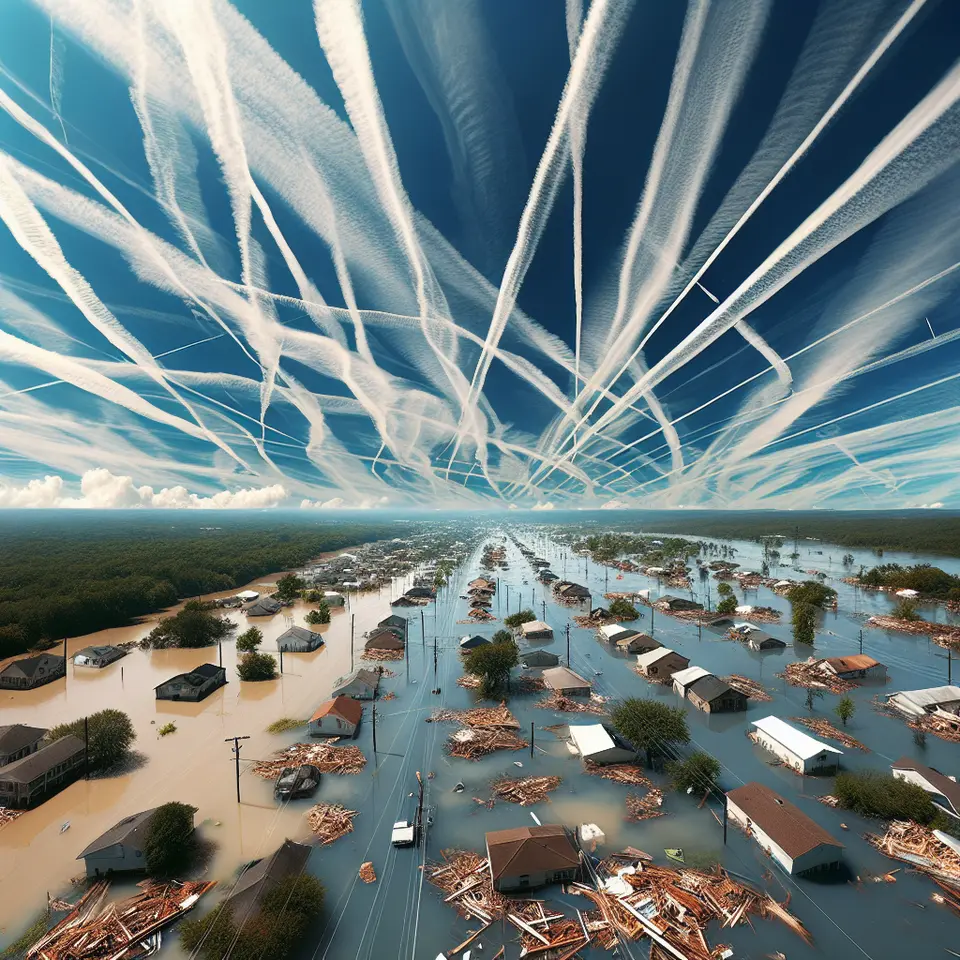
Chemtrails, Contrails, and Conspiracy Politics: How a Fringe Idea Went Mainstream
Estimated reading time: 5 minutes
Key Takeaways
- Chemtrails are not real; what people see in the sky are water-vapor contrails, but belief in a secret spraying program is rapidly spreading.
- Legislators in more than 30 U.S. states have introduced bills to regulate or ban “chemtrails” and geoengineering, despite a lack of scientific evidence.
- Climate scientists stress that current weather-modification tools like cloud seeding cannot create massive disasters such as hurricanes or historic floods.
- Conspiracy narratives around chemtrails thrive in low-trust environments, offering simple villains to blame instead of confronting climate change and policy failures.
- Activists and online influencers are filling gaps left by slow, uneven disaster response, using chemtrail fears to build political power and audiences.
Table of Contents
- What Are Chemtrails and Why Do People Believe in Them?
- From Conspiracy Theory to State and Federal Legislation
- The Science Behind Contrails, Cloud Seeding, and Geoengineering
- How Chemtrail Beliefs Spread and Who Believes Them
- Politics, Weather Disasters, and a Search for Someone to Blame
- How to Think Critically and Where to Learn More
What Are Chemtrails and Why Do People Believe in Them?
In the article, chemtrails are described as a sweeping conspiracy theory: the belief that the white streaks behind planes are deliberate releases of toxic chemicals or “weather weapons” controlled by the military or secret elites.
Atmospheric scientists, including Dr. Andrew Dressler of Texas A&M, are unequivocal: the streaks are contrails—ice crystals formed when hot jet exhaust meets cold air. He compares banning chemtrails to “banning unicorns or Bigfoot.”
Yet figures like Michael Lewis Arthur Meyer, a militia-aligned activist and self-proclaimed independent journalist, insist that the U.S. military and DARPA are “playing God with the weather.” After Hurricane Helene devastated western North Carolina, Meyer framed the disaster as a planned attack via “weather weapons,” using Telegram broadcasts and on-the-ground activism to promote evacuation routes and “counteroffensives” against supposed spraying programs.
From Conspiracy Theory to State and Federal Legislation
What used to be fringe chat-room content is now showing up in legislative text. At least 30 states have recently proposed bills aimed at “chemtrails,” “geoengineering,” or “weather modification.”
Notable examples include:
- Tennessee (2024) – First state to outlaw intentional atmospheric injections meant to alter temperature, weather, or sunlight intensity.
- Florida (2025) – A similar bill signed with criminal penalties up to a $10,000 fine for weather-modification activities.
- Louisiana & Pennsylvania (proposed) – Bills considering fines up to $200,000 and $500,000 respectively.
- Wyoming – Considering a bill to prohibit release of “atmospheric contaminants,” framed by some as “blocking the geoengineering.”
At the federal level, high-profile politicians amplify the narrative. Marjorie Taylor Greene has claimed “they control the weather” and introduced the Clear Skies Act, which would criminalize releasing chemicals into the atmosphere to modify weather.
The Science Behind Contrails, Cloud Seeding, and Geoengineering
The article carefully separates real, limited weather-modification practices from the broad, unsupported chemtrail claims:
- Contrails – Persistent, icy clouds formed from jet exhaust. No credible evidence ties them to secret chemical spraying programs.
- Cloud seeding – Spraying clouds with silver iodide to slightly increase rainfall or snowfall. Used since the 1960s, its impacts are modest, not catastrophic.
- Solar geoengineering – Also called solar radiation modification; a theoretical proposal to reflect more sunlight by injecting particles (such as sulfur dioxide) into the upper atmosphere. Still largely in the research and debate phase, not an active program.
Professor Jeffrey French of the University of Wyoming underscores the limits of these tools: humans cannot currently engineer hurricanes like Helene or massive floods on command. “That’s nature,” emphasizes Dressler.
How Chemtrail Beliefs Spread and Who Believes Them
Online ecosystems have supercharged chemtrail narratives. Platforms like X (formerly Twitter), Telegram, and conspiracy-focused websites such as Geoengineering Watch amplify claims that mainstream science has repeatedly debunked.
Surveys highlight how widespread these beliefs have become:
- A 2016 survey by Dustin Tingley and Gernot Wagner found 10 percent of U.S. adults thought the chemtrails theory was “completely true,” with another 20–30 percent calling it “somewhat true.”
- A 2025 study in Communications Earth & Environment reported around 20 percent of respondents believed weather modification is “somewhat or completely true,” noting patterns among younger, religious, conservative respondents with lower educational attainment.
Figures like RFK Jr., Naomi Wolf, and media personalities have helped legitimize chemtrail talk by entertaining or endorsing the claims, inviting activists like Dane Wigington into mainstream podcasts and TV shows.
Politics, Weather Disasters, and a Search for Someone to Blame
The article situates chemtrail fears inside a broader context of climate anxiety and institutional mistrust. As extreme weather worsens—like the Texas flood that killed more than 130 people in 2025—some people find it easier to believe in deliberate attacks than in complex, long-term climate change.
Folklore scholar Timothy Tangherlini explains that in “low-trust situations,” stories about hidden plots by governments or chemical companies can feel more emotionally satisfying than scientific explanations. They also offer simple solutions—“stop the spraying”—instead of messy policy work around emissions, infrastructure, and inequality.
The story of Meyer in flood-ravaged western North Carolina is a vivid case study. While FEMA and other agencies struggled with slow, uneven aid—particularly for poorer residents—Meyer stepped into the vacuum, presenting himself as a rescuer and truth-teller. He pointed to streaks in the sky, NEXRAD towers, and “weather weapons,” promising that once chemtrails stopped, nature and people would quickly “recover.”
For residents trying to rebuild homes on Good Loop Road, the reality was more prosaic: ripped-out insulation, destroyed cars, and kids needing to get to school. But conspiracy narratives provided at least an explanation for why their lives had been upended.
How to Think Critically and Where to Learn More
If you’re unsure what to believe when you see crisscrossed white lines in the sky, this article suggests a few practical steps:
- Check primary sources – Agencies like the EPA explicitly state they are unaware of any intentional contrail formation for geoengineering or weather modification over the U.S.
- Look for peer-reviewed science – Studies on contrails, cloud seeding, and climate science are widely accessible through university and government websites.
- Be cautious with “whistleblower” videos – Anonymous accounts with sensational claims but no verifiable data are red flags.
- Separate real policy debates from myths – There are legitimate discussions about whether solar geoengineering research should proceed and how to govern it. Those debates are very different from claims that hurricanes are “steered” toward political enemies.
To deepen your understanding, consider exploring:
- Educational explainers on contrails and aviation from major meteorological organizations.
- Climate-science resources on extreme weather and risk, which connect floods and hurricanes to long-term warming trends rather than secret weapons.
- Media literacy guides that teach how to evaluate sources, images, and viral claims.
Ultimately, the article argues that while chemtrails are fiction, the fears behind them are real: fear of abandonment after disasters, fear of government secrecy, and fear of a changing climate. Addressing those fears requires better science communication, more effective disaster response, and policies that meet people where they live—rather than chasing clouds for villains that aren’t there.
Source: https://www.rollingstone.com/politics/politics-features/chemtrails-banning-laws-1235488069/
Leave a Reply