
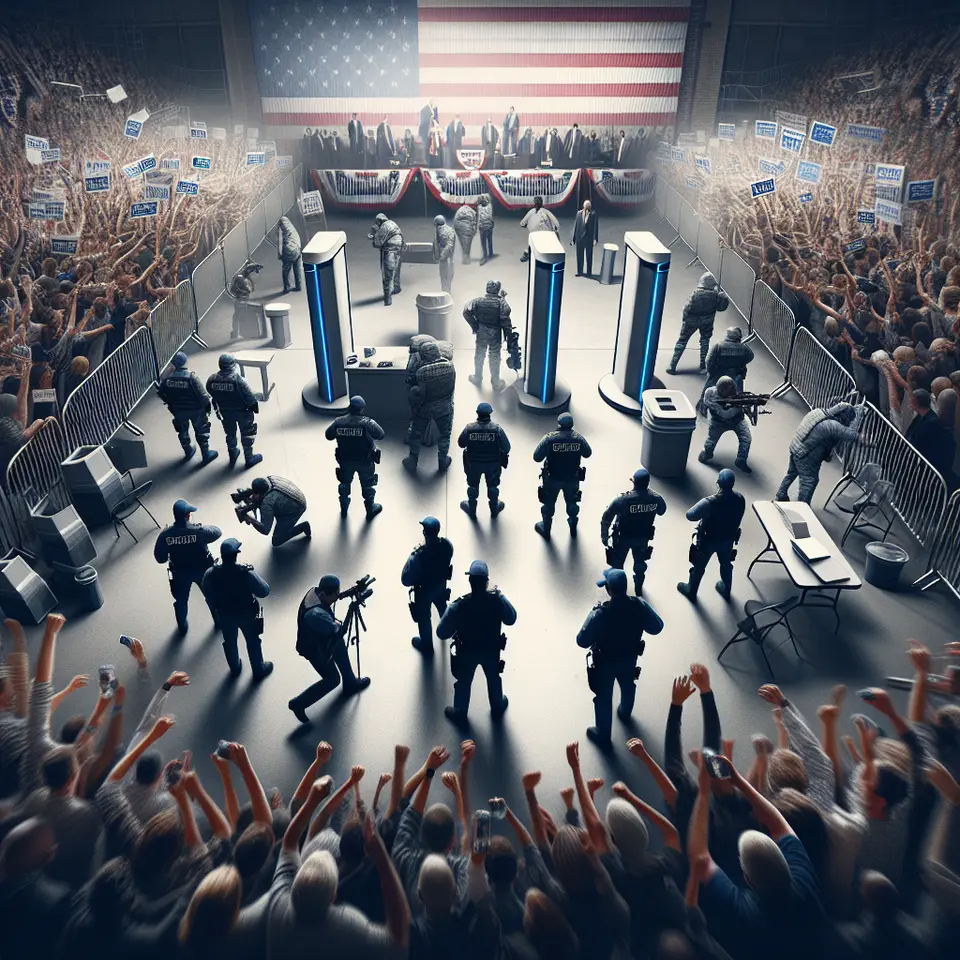
Campaigning Under Threat: How Political Violence is Shaping the Democratic Primary
Estimated reading time: 5 minutes
Key takeaways
- Security becomes central as campaigns face higher threat levels, influencing rally formats and travel.
- Officials are expanding protective measures, from metal detectors to bodyguards and protective details for families.
- Historical context shows violence shaping political life long before recent events.
- Campaign funding rules are evolving to allow security expenditures, easing some costs.
- Public events may shift to controlled environments, affecting grassroots engagement.
Table of contents
- What is changing in campaigns due to threats
- Security measures on campaigns
- Examples from governors and candidates
- Impact on early primary campaigns
- Historical context of political violence
What is changing in campaigns due to threats
Politicians describe a shifting landscape where threats drive how public appearances are planned. Fear extends beyond personal safety to crowd management, exit routes, and risk assessment. Leaders acknowledge that risk cannot be reduced to zero, so resilience and smart preparation take precedence.
Security measures on campaigns
Campaigns increasingly layer safety: reinforced barriers, armed security, attendee vetting, and coordinated intelligence with state and local police. The US Secret Service protects major-party nominees and can assist candidates with DHS approval. Campaign teams monitor online chatter and coordinate with Capitol Police for events near federal spaces.
Examples from governors and candidates
Kentucky Gov. Andy Beshear notes he feels safe personally but worries for others, influencing scheduling. Gov. JB Pritzker has expanded his security detail, including a family detail in some settings. Spanberger’s campaign installed metal detectors at a Virginia restaurant six days before her victory. Mikie Sherrill and Zohran Mamdani describe adjusting schedules and events to minimize risk, including guarded crowds and reserved venues. Campaign funds increasingly cover security costs, and aides report some in-person events are moved indoors or canceled for safety.
Impact on early primary campaigns
Even at the outset, threats alter where and when candidates appear. Private security, protective details, metal detectors, and roped-off lines create a different dynamic from prior cycles, potentially limiting unscripted voter moments while preserving safety.
Historical context of political violence
Political violence has punctuated campaigns for generations, from assassinations to coordinated online threats. Officials stress moral clarity and the need to keep public life accessible while safeguarding participants.
As threats rise, the balance between accessibility and security will define the next phase of Democratic campaigning.
Source: https://www.cnn.com/2026/01/07/politics/democrats-2028-presidential-candidates-safety
Leave a Reply