
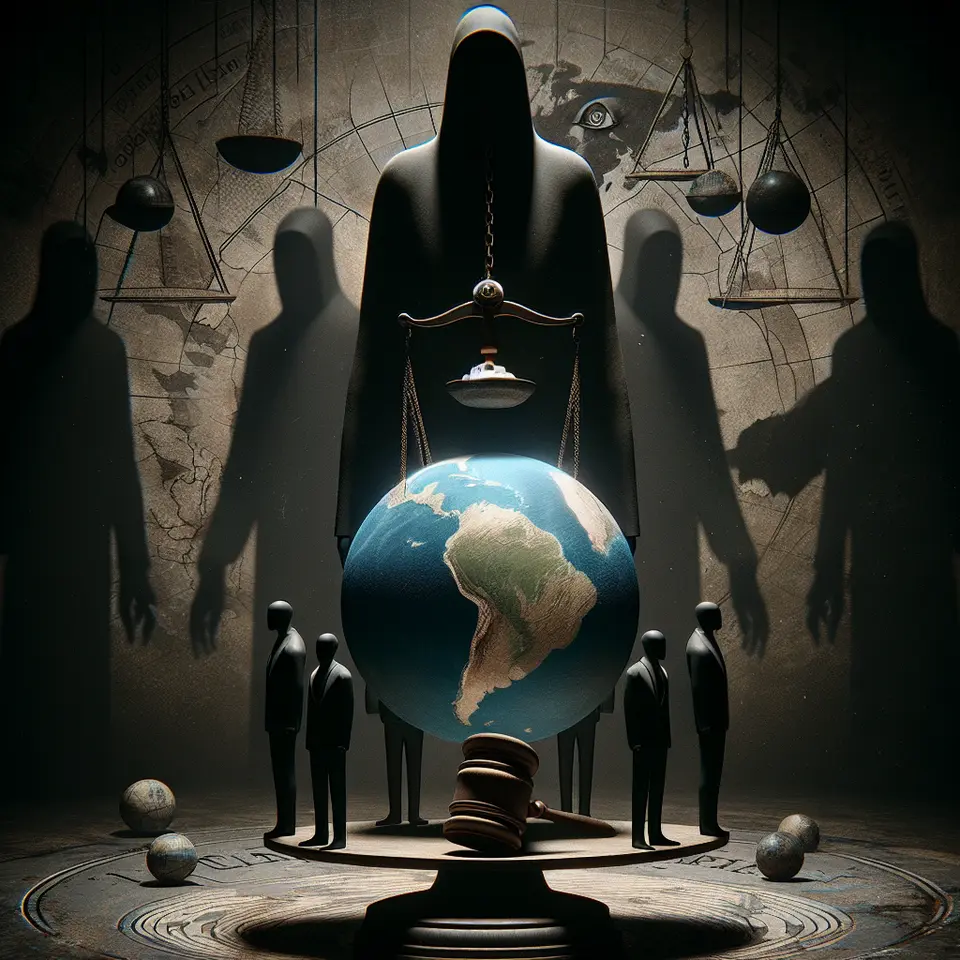
The Age of Aggression: How Strongman Politics Is Dismantling the Post-1945 Order
Estimated reading time: 5 minutes
Key takeaways
- The four waves of atrocity accountability chart a trajectory from hopeful norms to a fragile, evolving system under strain.
- The Age of Aggression signals genuine norm collapse as powerful states openly defy the UN Charter’s prohibition on force.
- Institutions like the ICC and hybrid tribunals persist, while efforts to prosecute aggression expand amid geopolitical disruption.
- A fifth wave will require renewed commitment to international law, stronger justice mechanisms, and broad coalitions to confront strongmen.
Wave I: Nuremberg and the Birth of Modern Accountability
The postwar moment established that leaders could be criminally responsible for aggression and atrocities. Nuremberg articulated three essentials: individual responsibility for international crimes, rejection of heads-of-state impunity, and a rules-based international order anchored in the UN Charter.
Nuremberg created the architecture for modern international criminal law and set a hopeful norm that power could be restrained by law.
Wave II: The Age of Accountability (1990s–2010s)
In the Balkans and Rwanda, tribunals and truth-seeking processes emerged. Hybrid courts, including the Special Court for Sierra Leone, indicted a sitting head of state, while the International Criminal Court sought a permanent deterrent. Universal jurisdiction and domestic accountability complemented truth commissions.
Wave III: The Age of the Strongman
From the 2010s onward, authoritarian leaders consolidated power, democratic norms eroded, and disinformation and political violence normalized. International justice grew paralyzed as powerful states challenged constraints.
Wave IV: The Age of Aggression
The fourth wave is its logical extension: force as a primary tool of foreign policy, with the UN Charter’s prohibitions under assault. The United States has signaled a shift toward a nation-centric approach, pressing coercive postures toward neighbors and signaling that great powers may act unilaterally.
Russia’s aggression against Ukraine underscores how norm erosion eases justification for force. The Security Council’s authority appears diminished as power politics prevail. Yet, the ICC’s activated jurisdiction over aggression and proposals for a Ukraine tribunal illustrate ongoing accountability options.
Implications for the Future
If unchecked, this trend risks more interstate conflicts, greater mass-atrocity risk, weaker global governance, and a legitimacy crisis for international criminal law—undermining decades of progress toward accountability.
Conclusion: The Need for a Fifth Wave
Crane argues for a fifth wave grounded in renewed devotion to the UN Charter, stronger tools to prosecute aggression, and a global coalition to confront strongmen. Civil society remains a critical asset in documenting abuses when courts cannot act.
Source: https://www.jurist.org/commentary/2026/01/the-age-of-aggression-how-strongman-politics-is-dismantling-the-post-1945-order/
Leave a Reply