How Local Belonging Can Help Heal National Political Divisions
Estimated reading time: 5 minutes
Key takeaways
- Many Americans are experiencing profound loneliness and disconnection, which fuels political extremism and mistrust.
- Local communities, mutual aid networks, and service projects can rebuild a sense of belonging across political and social divides.
- Research highlighted in the book The Upswing suggests that moral and cultural change often precedes economic and political renewal.
- Simple actions like meeting your neighbors, serving others, and forming local groups can reduce isolation and strengthen democracy.
- Individuals and families can model a broader definition of success that includes service, community care, and shared responsibility.
Table of Contents
- Why belonging matters more than we think
- Lessons from history: How cultures shift before politics
- How local communities become an answer to national divisions
- Practical steps you can take in your own neighborhood
- Ideas for families: Teaching a new definition of success
- Keep exploring: Ways to deepen your civic life
Why belonging matters more than we think
Behind America’s noisy political conflicts lies a quieter crisis: millions of people feel alone, unseen, and disconnected. In New Hampshire and Vermont, stories from a recent PBS report put human faces to this trend.
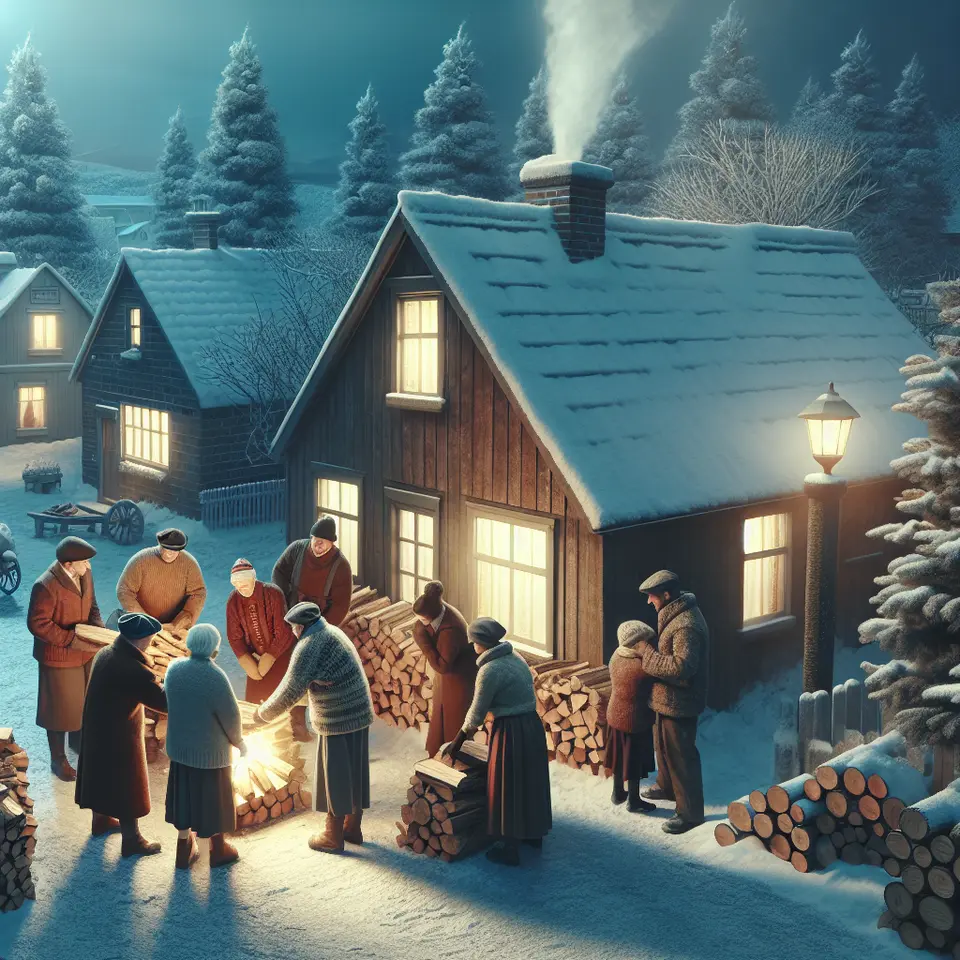
Peter Brown, a 20-year-old who once spent most of his time alone playing video games, found friendship and purpose after joining a local congregation of the Church of Jesus Christ of Latter-day Saints. Through chopping firewood for neighbors and serving alongside others, he moved from isolation to feeling, in his words, “valued” and “supported.”
Another resident, Carol Buffum, stayed inside for five years after an infection changed her appearance. Masked and withdrawn, she felt scrutinized and judged. Slowly, with encouragement from others and the strange equalizer of the COVID-19 pandemic, she began going back outside and discovered that community was less harsh and more open than she feared.
These stories echo a broader reality: when we lack belonging, our “nervous system is literally on fire,” as writer and researcher Shaylyn Romney Garrett explains. That stress and fear can make us more vulnerable to extreme views, conspiracy theories, and dehumanizing people who disagree with us politically.
Lessons from history: How cultures shift before politics
Garrett, co-author of the 2020 book The Upswing: How America Came Together a Century Ago and How We Can Do It Again, draws a powerful parallel between today and the Gilded Age: rapid technological change, inequality, and political corruption.
Her research with political scientist Robert Putnam found something surprising: economic reforms were not the first domino to fall when America last recovered from a period like this. Instead, what changed first was cultural and moral:
- People began to say, “It’s not all about us.”
- Civic groups, clubs, and faith communities flourished.
- Service and duty were widely seen as part of a life well lived.
In other words, healing started with relationships and values, not with laws or markets. That historical lesson suggests that today’s polarization cannot be solved by policy debates alone. We also need spaces that remind us how to treat each other as full human beings.
How local communities become an answer to national divisions
Many modern “bridging” efforts focus on structured dialogues between Republicans and Democrats. While useful, Garrett argues these can be too “head-centered,” overemphasizing ideology and underemphasizing the heart.
She suggests a different starting point: shared, nonpolitical experiences—like stacking firewood together, packing hygiene kits for the homeless, or gathering neighbors in an apartment community room. These activities:
- Let people connect as neighbors, parents, workers, or caregivers first—not as partisans.
- Create “morally formative” experiences, where we practice generosity and humility.
- Build mutual aid networks that are there long before and long after any election.
The key insight is simple but powerful: national divides are often softened by hyperlocal trust. When you know the retired neighbor down the street or the young adult gaming alone in the basement, it becomes harder to flatten “the other side” into a stereotype.
Practical steps you can take in your own neighborhood
You don’t need a grant, a formal nonprofit, or a title to start bridging divides where you live. Consider trying one of these small but meaningful actions in the next month:
- Meet one neighbor you don’t know yet. Knock, introduce yourself, and exchange contact information in case of emergencies.
- Offer a simple act of help. Ask, “Is there anything you need a hand with this week?” You might discover an aging neighbor without family support or a young person feeling adrift.
- Host a low-pressure gathering. Use a lobby, yard, or community room for a “bring-your-own-mug” coffee hour or board game night—no politics required.
- Join or restart a local group. Think book clubs, walking groups, parent meetups, service clubs, or neighborhood cleanups.
- Pair service with conversation. Volunteer at a food pantry, school event, or shelter and gently get to know the people beside you.
To keep yourself motivated, you might set a personal goal like: “Once a month, I’ll do one thing that reduces someone else’s loneliness.”
Ideas for families: Teaching a new definition of success
Garrett notes that we also need to reshape what we celebrate at home. If children only hear that success means higher income or status, they may miss the deeper satisfactions of community and contribution.
Families can gently rebalance the message by:
- Highlighting service as an achievement. Praise kids for helping neighbors, volunteering, or including someone who feels left out.
- Making local giving a routine. Choose a regular practice—donating items, writing thank-you notes to community workers, or cooking an extra meal for someone in need.
- Talking explicitly about “a thriving community.” Ask at dinner: “What did we do this week that made our block, school, or town better?”
These small choices teach that a good life isn’t just about getting ahead—it’s also about helping others feel like they belong.
Keep exploring: Ways to deepen your civic life
If this topic resonates with you, consider treating the coming year as a personal experiment in connection. You might:
- Map the community resources within a 15-minute walk or drive—schools, libraries, faith communities, senior centers, and mutual aid groups.
- Sign up for a local newsletter or bulletin (from a community center, city, or neighborhood group) to stay informed about events and needs.
- Create a simple contact list for your street or building so people can reach out during storms, health crises, or isolation.
National headlines will continue to be intense, especially in election years. But as this reporting from New Hampshire shows, some of the most powerful answers are close to home: the neighbor you haven’t met yet, the community room that’s sitting empty, the person who just needs an invitation to step back into the world.
Source: https://www.pbs.org/newshour/show/why-local-communities-may-hold-the-answers-to-national-political-divisions
Leave a Reply