Year In Review: How Trump's 2025 Tariff Strategy Shaped The U.S. Economy
Estimated reading time: 5 minutes
- Tariffs took center stage in President Trump's 2025 economic agenda, driving both domestic political debate and global market uncertainty.
- Americans gave Trump low marks on the economy in fresh polling, despite strong headline indicators in some sectors.
- Businesses and consumers faced rising costs as tariffs filtered through supply chains, affecting everything from manufacturing to everyday goods.
- Economic uncertainty became a defining feature of 2025, with investors, workers, and families trying to plan around shifting trade and tariff policies.
- NPR's Politics team used on-the-ground reporting and economic analysis to unpack what Trump's approach means heading into 2026.
Table of Contents
- Year in Review: Trump's 2025 Economy at a Glance
- Tariff Policy: The Core of Trump's Economic Playbook
- Public Opinion: Why Voters Give Low Marks on the Economy
- Uncertainty, Households, and Your Wallet
- How to Use This Analysis and Explore More
Year in Review: Trump's 2025 Economy at a Glance
The NPR Politics Podcast episode, "Year in review: Trump's economy", brings together political correspondent Sarah McCammon, White House correspondent Danielle Kurtzleben, and chief economics correspondent Scott Horsley to unpack how President Trump managed the economy in 2025. Recorded as the country heads toward 2026, the conversation focuses on the White House's strategy, with a special emphasis on tariffs and how they reshaped both politics and pocketbooks.
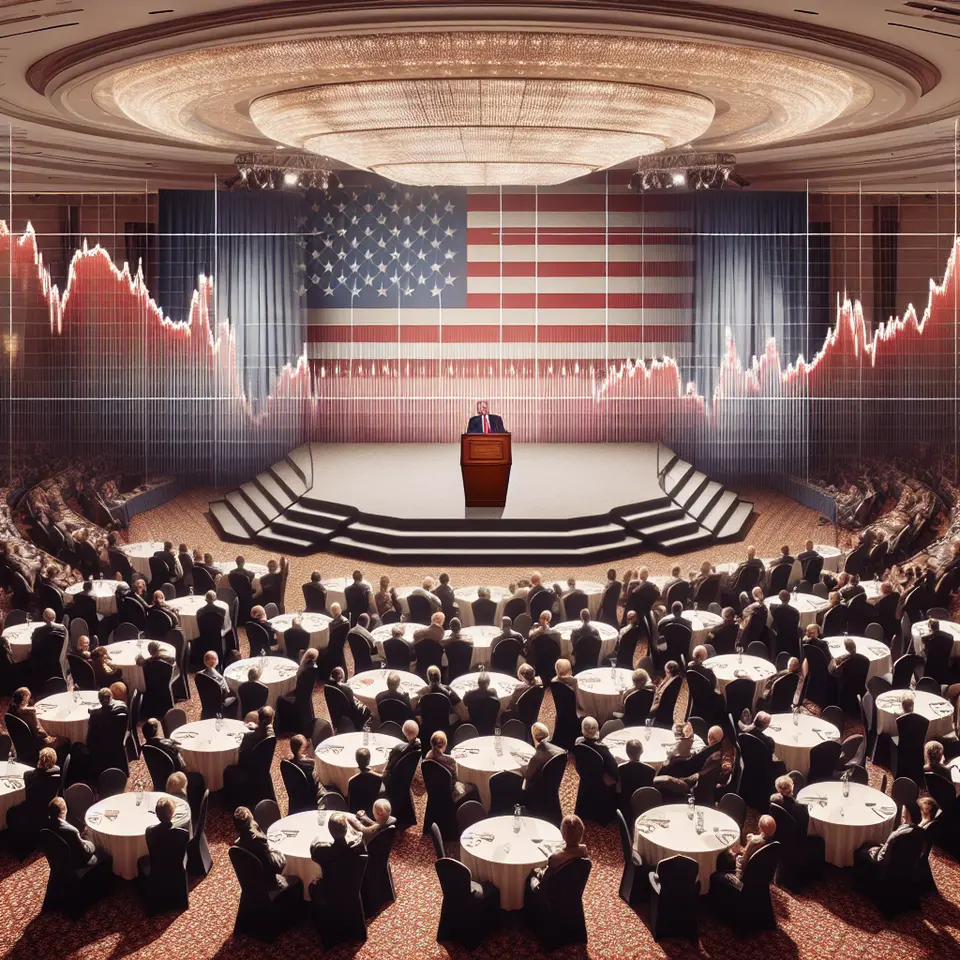
Set against a backdrop of campaign-style appearances — including a December 9, 2025 gathering at a Pennsylvania resort — the episode looks beyond the speeches to the underlying data, policies, and tradeoffs that marked Trump's economic year.
Tariff Policy: The Core of Trump's Economic Playbook
According to the episode description, tariffs are the signature economic tool in Trump's 2025 strategy. By raising import taxes on targeted goods and countries, the administration aimed to:
- Boost domestic production by making foreign goods more expensive
- Exert pressure in geopolitical disputes
- Signal a tougher, "America First" posture on trade
But tariffs rarely operate in a vacuum. As the NPR team highlights across related coverage like Consider This from NPR on what more tariffs could mean for you, these measures flow through entire supply chains — from ports and warehouses to factories, retailers, and ultimately consumers.
For readers trying to interpret this: if you run a small business that imports parts, or you shop for goods that rely heavily on global components, tariffs in 2025 likely showed up as higher prices or thinner margins, even if indirectly.
Public Opinion: Why Voters Give Low Marks on the Economy
One of the most striking elements in NPR's political coverage this year is summarized in a related episode: Americans give Trump low marks on the economy. Even when some indicators look solid on paper, voter sentiment tells a more skeptical story.
Listeners hear how everyday experiences — rent, groceries, credit-card interest, job stability — can override any positive headline numbers. The politics podcast connects these dots: tariff-driven uncertainty, price changes, and volatile markets all contribute to a sense that the economic ground is less stable than official reports might suggest.
If you're a voter or policy watcher, this split between data and perception is critical. Campaigns in 2026 will not just be about what the economy "is" in charts, but how it feels in households across the country.
Uncertainty, Households, and Your Wallet
The NPR Politics team and NPR's broader coverage, including Trump’s economy is marked by uncertainty. What could more tariffs mean for you?, frame 2025 as a year where uncertainty itself became an economic cost.
For individuals and families, that can mean:
- Delaying big purchases (cars, homes, appliances) because prices and rates feel unpredictable
- Adjusting budgets to account for higher costs linked to tariffs
- Watching job announcements and layoffs more closely in trade-exposed industries
For business owners, it can mean holding off on hiring or investment because you don't know where tariffs, rules, or consumer demand will land next. The podcast helps translate these high-level policy moves into day-to-day decisions that shape growth, wages, and job security.
How to Use This Analysis and Explore More
To go deeper, you can:
- Listen to the full 18-minute episode of the NPR Politics Podcast via NPR's site or app to hear detailed discussion and examples.
- Compare economic stories by pairing this episode with related pieces on foreign policy, immigration, and law enforcement to see how Trump's broader agenda intersects with economic outcomes.
- Create your own "economic diary": track how prices, job prospects, and financial stress change for your household over a few months. Then map these changes against news about tariffs and federal policy.
For readers who follow markets, policy, or just their own budget, NPR's sponsor-free NPR Politics Podcast+ offers extended and bonus content, as well as more frequent touchpoints as new economic decisions are made.
Ultimately, 2025 under Trump is a case study in how trade tools like tariffs can ripple outward — shaping public opinion, business planning, and the political landscape heading into 2026.
Source: https://www.npr.org/2025/12/23/nx-s1-5640042/year-in-review-trumps-economy
Leave a Reply